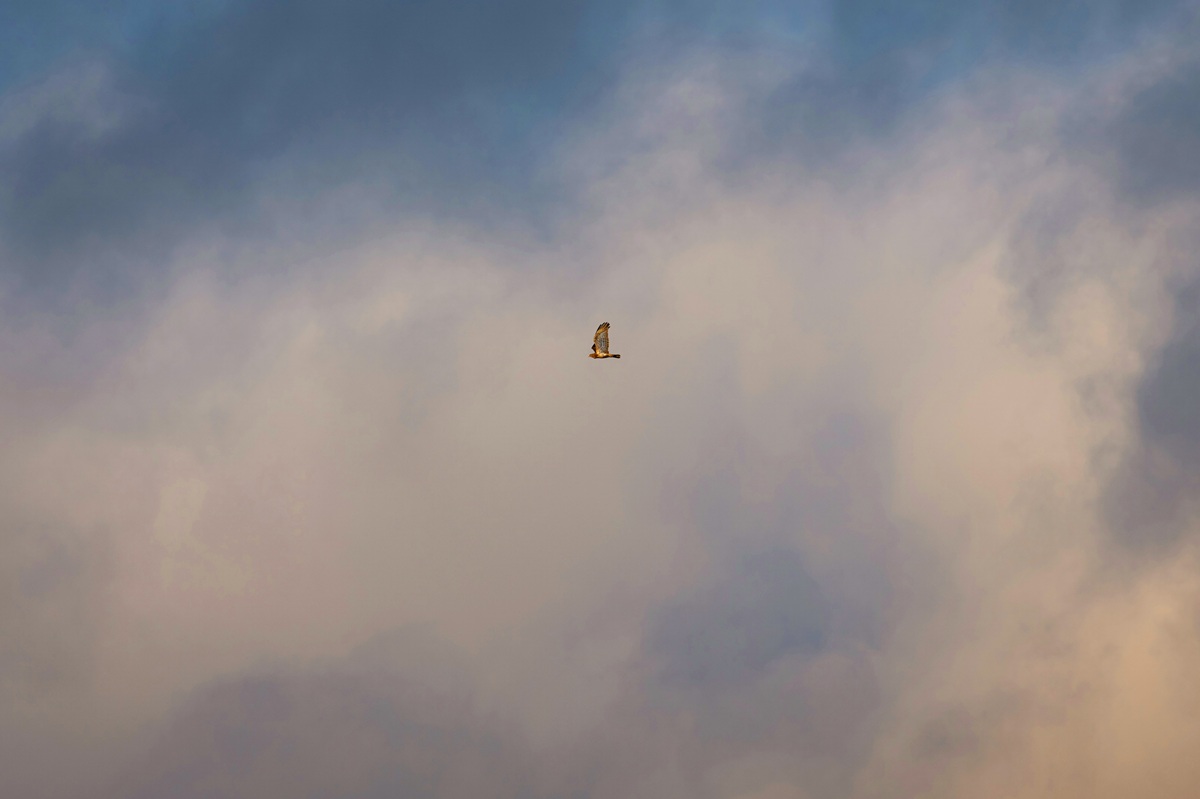
Photo credit Jacek Ulinski
Etana (14 minutes read)
written by Senthan Thomas Sivasangar
To the east of an endless river, in the vast unknown, there is a city built of sand and stone. Great towers of chalk, carved from the mountains of Sumeria, stand proudly amidst desert plains, illuminated only by slivers of still moonlight. And when night falls within the city’s walls, it is said that the wind blows silent and the stars hold their breath. Nature itself dare not make a sound.
For this is a city built by the Gods themselves.
At the heart of this city stands a towering palace. At the heart of this palace is a chamber, where golden shadows dance across stone walls. And at the heart of this chamber, heavy with a wish as old as time itself, lies a King, who stares, calculating, at the woman beside him.
He waits, unwavering, as the room is filled with the steady rise and fall of her breath. Her hair sprawls like onyx rivers over her shoulders, and her fingers are rested like silk over his. Behind her eyes, though, the King sees a sadness. His attention draws towards her stomach — to the emptiness within.
“An heir, my love,” he whispers. “Do you not long for an heir?”
“This city,” she starts, “was destined to live and die …” Her eyes are still shut, her mind still absent, as she finishes: “With you.”
Silence falls over the room again, and the King’s gaze is drawn to the carvings on the wall; wicked prongs of fire and patient sweeps of water; animals locked in combat and men taming their fury; and above them all, Gods, arms spread wide, providing this world with sustenance, peace, beauty—
“Everything but the thing I long for most,” he muses, resting his head against hers.
And with a gust of wind through the cracks in his walls, he is consumed by sleep.
*
By dawn, the King is in his courtyard, hands folded behind his back as he offers gentle nods to the servants and maidens tending to the gardens. Some return frail smiles, while others trade nervous glances. The King hesitates, but continues on his march; after all, his garden is built on the power of the calm, the freedom to be and to be watched only by the Gods. The air is fresh with the scent of damp leaves and tree-bark, sugars and spices, grapevines and fig trees. His garden is peace. Overlooking the yard is a poplar tree, planted by the King himself in honour of the Gods who chose him.
He arrives at its side, a rare smile creeping across his cheek. A King is shaped by the peace he brings, and this tree is a talisman of the very first peace he brokered, seasons upon seasons ago.
The tree is ethereal now, glittering with diamonds of sunlight and birdsong, but its fruit were borne from conflict.
When it first bloomed, there was an eagle, stubborn and proud, who nested at the tree’s peak, and there was a serpent, evasive and crude, who settled by the tree’s roots. They were children of nature, given shelter by the Gods’ will, and the tree would bear enough fruit for them both to live comfortably. They built their humble abodes at opposite ends of the tree, and built their families out of nothing but the love that ran pure through their hearts, like the river Euphrates itself.
Trust, however, does not flow so easily.
The eagle could not bear to leave its eggs when a venomous bandit prowled beneath, and the serpent could not turn its back on its younglings while a bird of prey hovered above. Each demanded the other leave, and this, the smallest of conflicts on the mightiest of trees, was enough to bring thunder to the city’s quiet skies.
The King straightens, his chest swelling at the memory of his compromise.
One night, as the garden burned under the fires of their dispute, the King entered with ice in his breath.
“Enough!” he called, and the garden fell silent. The eagle and the serpent froze, and looked to the King at the foot of their tree. “Your hostility may well be founded from your duty, but duty alone will not preserve our peace.” The eagle’s wings retreated to its side, and the serpent’s tail coiled into its body. “This night, you will make a vow: the bird is not to touch the serpent’s brood, and the serpent is not to touch the bird’s. You will live alongside one another without a stray hiss, without a silent glare, or you — and your children — will be banished from this city.” He took another step, seizing both of their gazes in his. “Make your peace, foul-minded creatures, or I will see to your exile myself.”
Since that day, none of the King’s creatures have dared to whisper of dissent, but his smile now loosens as he glances to the coves and ponds around the tree. From within them, he feels eyes, watching, waiting, praying. Eyes consumed by fear.
“You.” He beckons a boy, small and dirty, covered in a worn kaunake and little else. “Secrets are no good in a garden like mine.” He motions his head towards the whispering maidens and the beasts in the brush. “What is being hidden from me?”
The boy looks to the floor, his bottom lip quivering. Not me, his eyes waver. Please, not me.
“Look at me, boy,” the King commands. The servant obeys, though the look in his eyes remains. The King lifts his chin and repeats his question: “What is afoot in my garden?”
When the boy speaks, it is weak and faltering.
“It’s …” He drops his eyes once more, collecting his courage. “It’s the eagle, my Lord. He has fallen.”
The King’s expression loosens, and he grips the boy’s arm. When the boy looks up again, the King’s face is barely an inch from his own.
“How do you mean,” the King whispers, restraining fury, “‘fallen’?”
Their exchange is interrupted by a sob, quiet, on the cusp of unhearing, hidden behind the poplar tree.
The King releases the boy’s arm, stepping slowly to the tree. When he leans around the tree’s stem, he finds just what the boy described — an eagle, fallen.
It lies on a bed of its own feathers, its wing bent beyond recognition. From its brow drop tears of silver, mixing with the crimson at the bird’s feet. It does not look up, but it holds its breath as the King approaches.
“Peace is a fragile thing,” he whispers, running a finger over the eagle’s broken wing. It recoils at first, on instinct. “What have you done, old bird?”
The eagle gives no reply, save for the faintest of glances towards its nest at the top of the tree. As the King follows his gaze, he sees the tails of three small serpents hanging limp over the nest’s edge, along with a larger snake’s head caught between two branches, all the life drained from its eyes. Its teeth, though, remain bared.
The King’s jaw clenches, his temple rippling with rage. The eagle continues to let out pained, remorseful sobs, telling the tale of what had happened without so much as a word.
The King stands.
“You, boy,” he says, motioning for the servant. “Take the bird to my chamber.” He turns to the other palace hands, who were half-engaged with their tasks, and half-enthralled by the scene behind the tree. “Nobody else is to touch the bird. You will return to keeping the peace.” He looks back to the eagle, his voice low and final. “I will see to you myself.”
*
“Will it live?”
The King turns from the table, tightening his lips.
“Nothing but a broken wing,” he assures her. “With the right care, he will recover.”
“And you will care for it? That is your plan?”
“Of course.” He turns back to the bird. Beneath it is a makeshift bed of paper and wool, and its wound has been dressed with honey and linen bandages. Her hand rests softly on his shoulder, and her voice is gentle as she asks: “Why care for the creature that poisoned your peace?”
The eagle dips its head, flickering its brow as if in response. Still it cries, inconsolable. The King turns to the carvings on the wall, to the water and the men and the Gods. He takes her hand, drawing her to sit beside him. His eyes affix to hers, and he takes a deep breath.
“There are stories, from the travellers who have met the Gods, of a garden in the heavens, greater even than ours.”
The lady smiles. “Impossible.”
“Yet it exists,” he continues. “At the entrance to this garden, in a pot made of gold, is a flower known as the Plant of Birth.” He looks at his carvings once more. “Its fruit is forged by Ishtar herself, and with one drop of its juice, just one drop…” The sentence falls away from him.
“You plan on finding this fruit?”
He turns back to his lady. “I dreamt when the sun set yesterday, my love, that Ishtar would hand me her fruit, and bring us a child. And the next morning, a winged creature fell to the earth.”
“I don’t understand,” she intercedes, shaking her head. “What do you mean to do?”
“My love.” He places a hand on her cheek, running his eyes over every detail of her face. “My youth and my eternity. My life and my death.” He turns one final time to the eagle lying on the table beside them. “I will ride this bird to the heavens,” he announces. “And I will bring you back an heir.”
“Are you ready, old bird?”
The eagle stands with its chest swelled and its eyes afire, watching the vast expanse above them. Beyond the eagle, the King sees layer upon layer of cloud, dark and unbroken.
“The bird is healed,” a voice behind him whispers, resting a hand on his shoulder. “A bird is always ready to fly. What of you?”
The King turns and lifts her hand to his lips. “If I am not ready now, I will never be,” he mutters, more to himself than to her. She returns to the shade of their castle, her gaze never leaving her love.
The courtyard teems with merchant-men and handsmaidens, but the air is still. At its centre, the King presses his breast to the eagle, his eyes closing and their breaths aligning, until man and bird have become one.
When his eyes open, the bird’s wings are spread wide, casting a great shadow across the yard. A murmur pervades the audience.
“Good luck, my love.” The lady’s wish is silent, but it reaches him nonetheless.
He inhales, and feels the city hold its breath with him, until at last: “Go.”
A deafening caw, a firm flap of the wings, and they are aloft. The King’s ears begin to rush with blood as the ground disappears beneath them.
Beneath him, the city and its people fade from giants to shadows, from shadows to specks of dust, and from specks of dust into nothing at all.
The burning in his ears crawls down his spine, and his fingers tremble around the bird’s neck. He remains mute as the ground itself sinks behind the clouds, but his head is hot with fear, with the call of the void, with the same two words running circles around his thoughts: let go, let go, LET GO!
The eagle climbs, oblivious, forcing the world further and further down as the glint of golden gates appears above them.
“I can’t …” The sentence falls into the distance with everything else.
Without another thought, he gives into the voices in his head.
He lets go, and surrenders to the mercy of the air. The sweat on his brow runs in reverse, and his limbs thrash in every direction until he can barely feel them at all.
For one minute, then two, then five, all he feels is falling.
Then, at last, the eagle’s call. Talons seize his torso, wrenching him out of his endless collapse.
“Down, bird!” he yells, a King turned into a little boy. “Take me down!”
*
The King awakes to the sting of cold water against his forehead.
His eyes open, his vision unblurs, and sitting at his side, where he lies on the bed, is his love.
“I failed, my love,” he mutters, looking past her to the dark stone ceiling that has replaced the open sky. “I did worse than fail, I ashamed myself.”
She keeps her silence, dabbing the cloth in her hands back into a bucket of cold water before lifting it to his forehead again. Behind her eyes is that ever-present sadness.
“It is not an heir I long for, my love,” she says, answering the question before he can ask it. He brushes her hand away and hauls himself upright, fighting the ache in his spine.
“Then what is it?”
With a sigh, she places the cloth back into the bucket, letting it sink to its bottom, and looks back at him.
“Do you know what your name means?” she asks.
He drops his head.
“A secret forgotten to time, my love,” he replies. “A name is nothing but a word.”
“No,” she frowns. “No, a name is a promise.”
The King wipes his eyes and shakes his head.
“When I was up there, in the sky,” he starts. “Up above the city that I thought would last forever, I saw how small it truly is. How frail, how fragile. It became nothing within a second. The seas, the oceans we see as everlasting, they disappeared behind a veil of clouds, and I was blind. I saw nothing, and in seeing nothing I saw how small we are. Man has made enemies of war, of plague, of the creatures that wait in the desert.” He shrugs his shoulders, before finishing: “Our foundations are made of stone, my love, and stone wears away.”
A pause settles between them. The King sets himself flat again, defeated by circumstance. Her hand rests over his chest, and follows the nape of his neck up to his cheek.
“Etana,” she whispers, and he utters a clipped breath. “It means ‘stabiliser of lands’.” He brings himself up again, until he is eye to eye with the woman he loves. “It means the man who sees fragility, the man who sees conflict, the man who sees the end of the world itself, and takes it away with a wave of his hand.”
“The name is nothing but a word,” he sighs.
“It is a promise,” she repeats, her voice firmer with each word. “If not a promise to your people,” she says, pressing her lips to his cheek: “It is a promise to me.”
*
The yard is empty now.
Night has fallen and the city is gripped by silence. The eagle waits, in the same place it had stood the day before, for its King’s command.
“You will fly,” his lady says. “You will fly, and when you return it will not be alone.”
The King says nothing, leaning into her embrace before turning to his destiny. He reaches his arms around the eagle and closes his eyes until they are breast to breast, until their breaths align, until he feels that man and bird have become one, once more.
“Without witness,” he whispers. “Without fear and without hesitation.” He looks up at the bird, whose eyes reflect the stars above — one of which holds the treasure they seek. “Fly, bird. Take me to where dreams come true.”
The eagle bows its head.
With a proud caw, the bird spreads its wings. One great push, and King Etana is in the air again. The air brushes his cheeks as they soar higher into the empty skies. In the distance appears that glint of gold again — the gates to the heavens themselves. Safe in his mind is that knowledge, the promise he once made to his wife: he will bring her back an heir.
Inspired by the article The Myth of Etana by Joshua J. Mark
Fancy trying your hand at historical or mythology-inspired fiction? You might like our annual Ink of Ages Fiction Prize!