I’d just finished my neurology ward tour and the rest of my duty in our hospital. My Nikon D90 camera and its incredible Nikkor AF-S DX NIKKOR 18-300mm f/3.5-6.3G ED VR lens were in my car. “I have plenty of time, what to do?” I asked myself. After a while, I decided to visit the Sulaymaniyah (Slemani) Museum. How about taking some pictures there and publishing them on Ancient History Encyclopedia?
The Sulaymaniyah Museum is the second largest museum in Iraq (after the Iraqi Museum in Baghdad) and was founded in the year 1961 CE. It lies within the heart of the city of Sulaymaniyah and looks over Salim Street, one of the main streets in the city. What a surprise! A lot of school children are about to enter the museum.
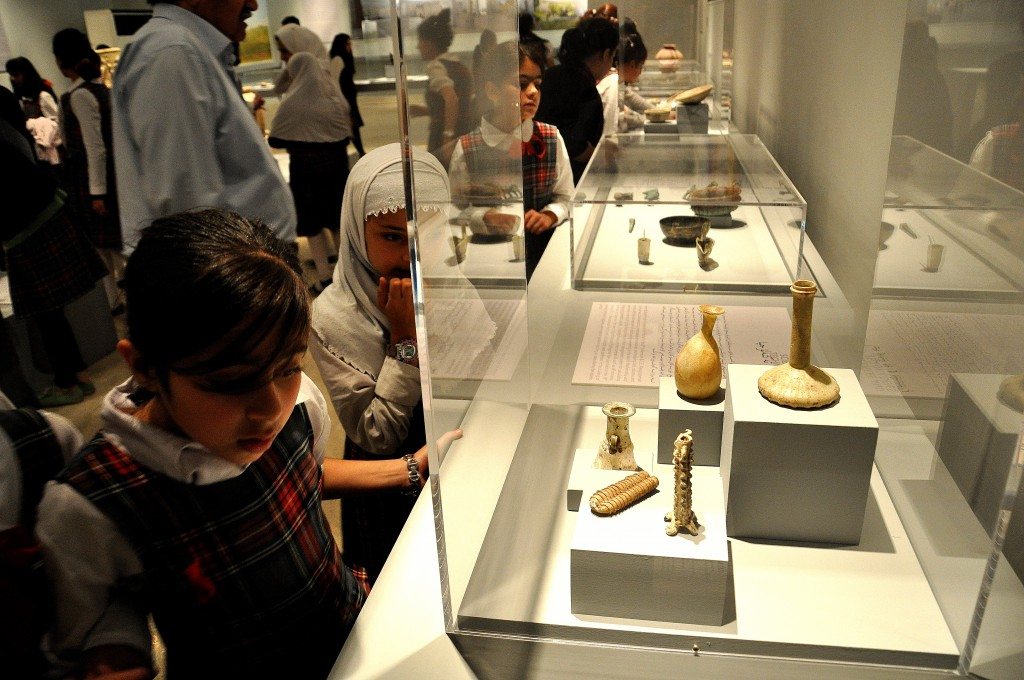
A group of primary school children are scrutinizing various artifacts. The girl close to me was looking at glass containers, which date back from the Sasanian period (from 226 CE) to the early Islamic and Umayyad period (750 CE). Photo © Osama S. M. Amin.
There are no tickets and the entry is free (similar to the British Museum). Once you enter the museum’s building, the main halls are straight ahead. The very first thing you will encounter is a replica of the rock-relief from the entry into the cave of Kiz Kappan, which is flanked by replicas of two mountainous rock-reliefs of Rabana and Meer Quli; these three replicas represent historical landmarks within the Governorate of Sulaymaniyah.
Turn right. You will enter a small hall which was reconstructed recently by UNESCO. This hall contains artifacts that date back from the pre-historic era to the Abbasid Islamic period. Many of the main and most important of the museum’s artifacts are displayed here.
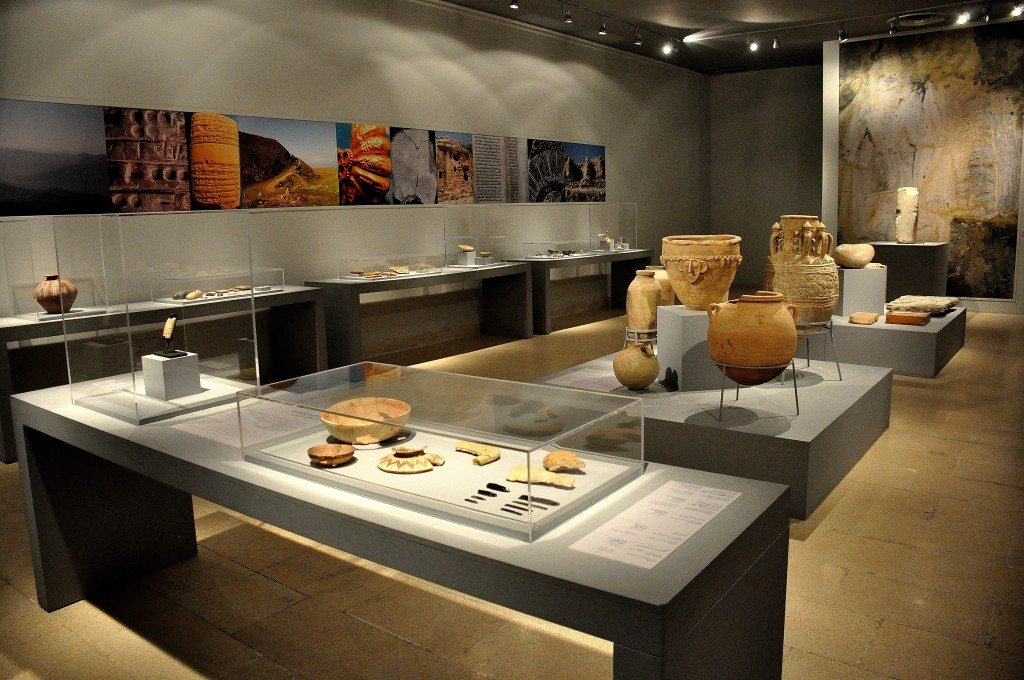
This museum’s hall was reconstructed by UNESCO and contains the museum’s main artifacts. The large wall poster in the background is a close-up picture of Darbandi Bilula’s mountainous rock relief, which lies near the Iraq-Iran border. It dates back to the Akkadian period. One of the cases displays a hand axe and a stone tool, which date back to the Paleolithic/Acheulean period, 100 000 BCE, the oldest human-made artifact in the museum’s collection. Photo © Osama S. M. Amin.
Next, and behind this hall, the museum is divided into two long halls, connected by a short and open lecture hall. The artifacts are displayed according to their chronology within Mesopotamian history (irrespective of their location within the Fertile Crescent) in separate displaying cases. Some artifacts belonged to ancient local city-states within modern-day Iraqi Kurdistan. We have not studied these cities or their findings in our school history books (for example, Simurrum kingdom)! The history of these cities was deliberately overlooked by Saddam’s regime, which concentrated on Assyrian and southern Mesopotamian history.
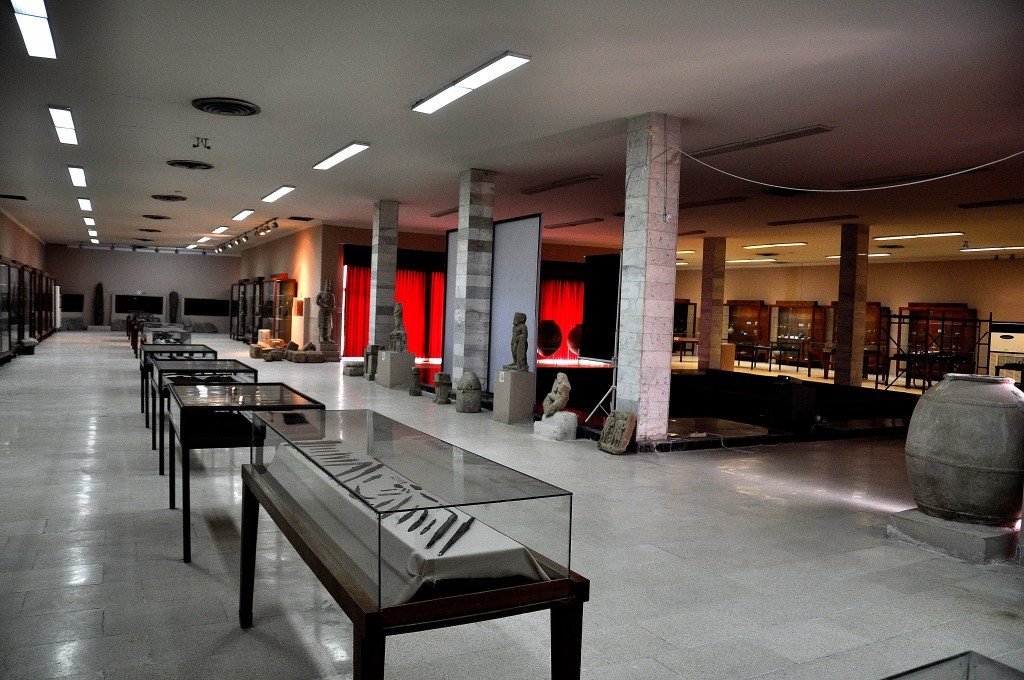
The two main and large halls of the Sulaymaniyah Museum. The halls are connected by a small square lecture hall. Photo © Osama S. M. Amin.
I saw many artifacts which were labeled with “IM”; this means that these belong to the Iraqi Museum! I then understood that they were on temporary loan to the museum. If you check out each and every item, you will finish the visit within one working day. It is not that large of a museum, though.
I shot innumerable pics and then met my friend, Mr. Hashim Hama Abdulla, the director of the museum. He took me to a private room where they restore and reconstruct recently excavated artifacts. I saw a woman who was polishing a newly excavated dish. Another woman was reconstructing an ancient necklace. Mr. Abdullah then took me to another room where a foreign archaeologist was studying the cuneiform inscriptions on several newly acquired clay tablets. I held some of the tablets in my hands! What a sensation and I thought, what good luck I have. It was indescribable!
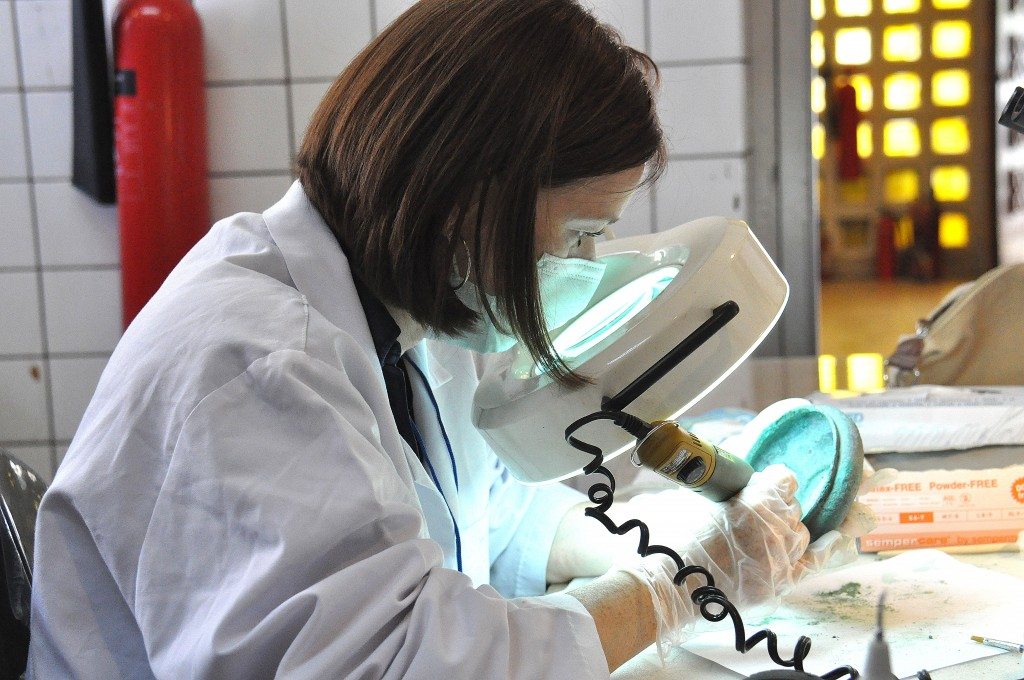
A newly excavated artifact (copper dish) from one of the ancient sites within the Governorate of Sulaymaniyah, Iraqi Kurdistan. A German archaeologist is polishing the dish. Regular visitors and tourists have no access to this room, where the museum’s staff reconstructs and restore excavated artifacts. The Sulaymaniyah Museum, Iraq. Photo © Osama S. M. Amin.
In spite of the turbulent circumstances Iraq is currently experiencing, the Sulaymaniyah Museum stands out among other museums in Iraq in that it is the only easily accessible museum for foreign and local tourists, all the time, with no constraints. It has a very friendly environment and very cooperative employees. Each artifact has a tag and a description in Arabic, Kurdish, and English. It has no Wifi/internet access for visitors, no café or restaurant inside the museum, and its hours are from 9 AM to 1 PM, Sunday to Thursday.
Each month, the museum obtains new acquisitions, thanks to the very generous funding and continuous support of the Patriotic Union of Kurdistan and one of its leaders, Mrs. Hero Talabani, wife of the former Iraqi president, Mr. Jalal Talabani. Within the Sulaymaniyah Museum, you will see, touch, and smell the scent of history! This is a place that you must visit, if you travel to Iraqi Kurdistan.
Old Babylonian Foundation Cones
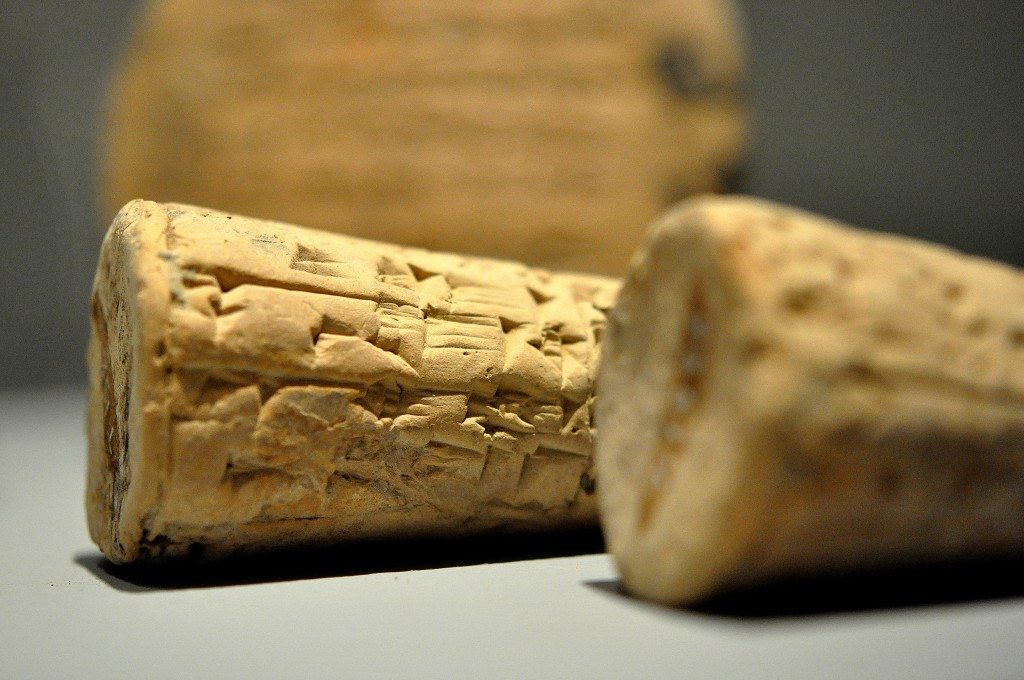
Clay foundation cones/nails. The cuneiform inscription on one of these cones records the construction of the temple of god Numushda in the city of Kiritab by Enlil-bani, king of Isin. Old-Babylonian period, 2003-1595 BCE. (The Sulaymaniyah Museum, Iraq). Photo © Osama S. M. Amin.
Sumerian Worshippers
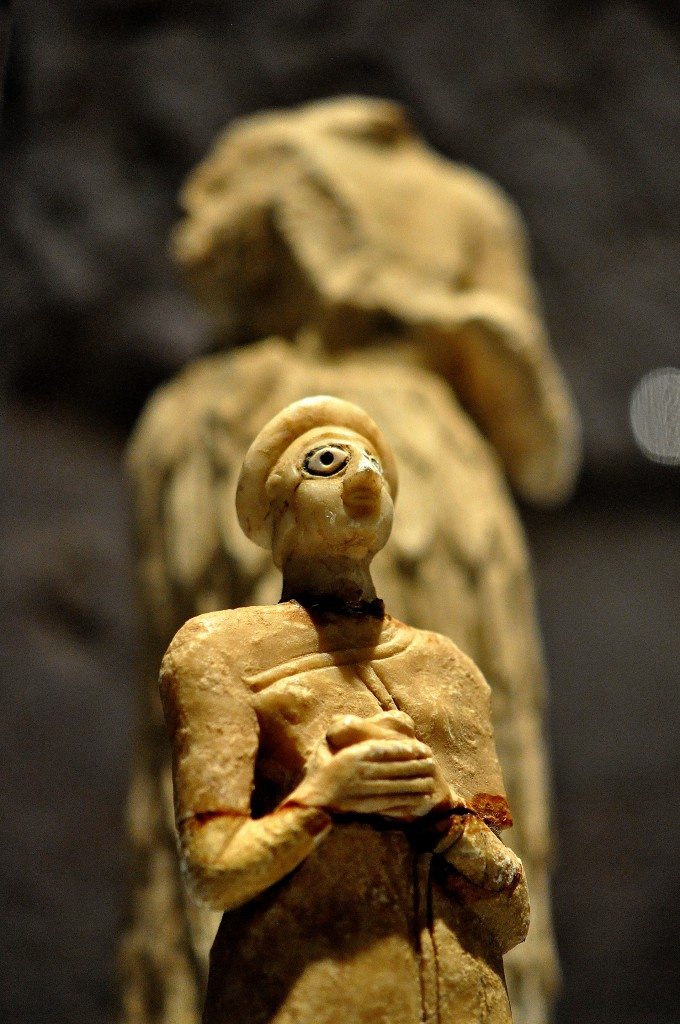
Two statuettes of Sumerian prayers/worshipers. From southern Mesopotamia, modern-day Iraq. Early dynastic period, 2800-2300 BCE. (The Sulaymaniyah Museum, Iraq). Photo © Osama S. M. Amin.
Paikuli Tower Blocks
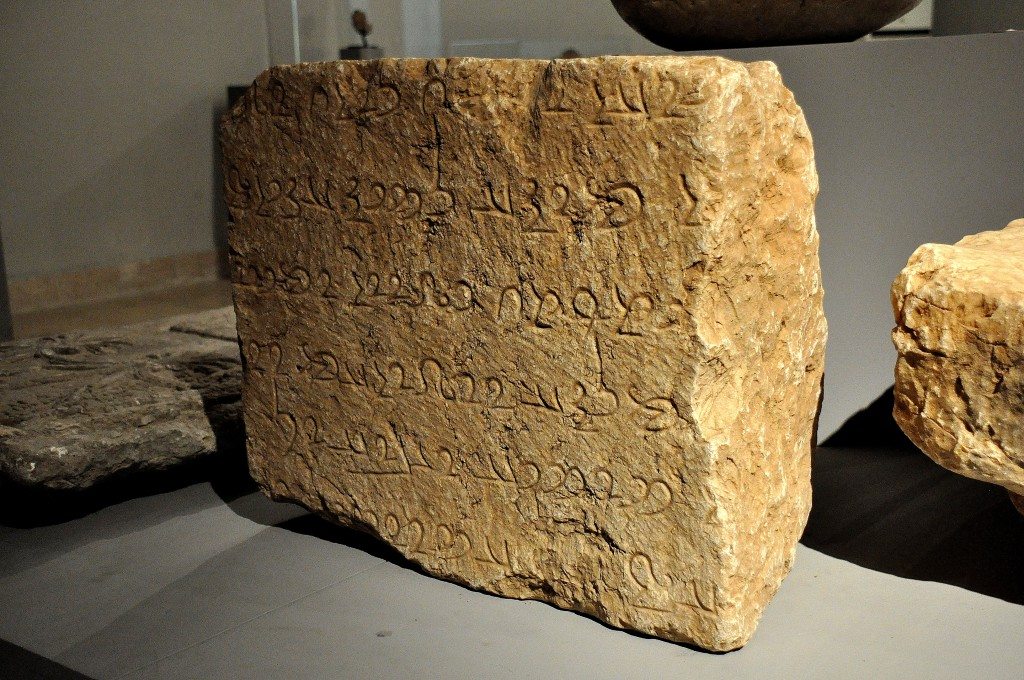
A stone block with inscriptions. This block and the one on the right are from the Paikuli tower. The tower lies on a hill near Barkal, a modern village south-west of Lake Darband -i-Khan, Sulaymaniyah Governorate, Iraq. It was set up as a monument commemorating the victory of the Sasanian king Narseh over his nephew Warham III (Barham III). The inscriptions were written in the Parthian and middle Persian languages. All the inscribed stone blocks are now in the Sulaymaniyah Museum. No other museum in Iraq or the world has any of these inscribed stone blocks. 293 CE. (The Sulaymaniyah Museum, Iraq). Photo © Osama S. M. Amin.
Gilgamesh Tablet
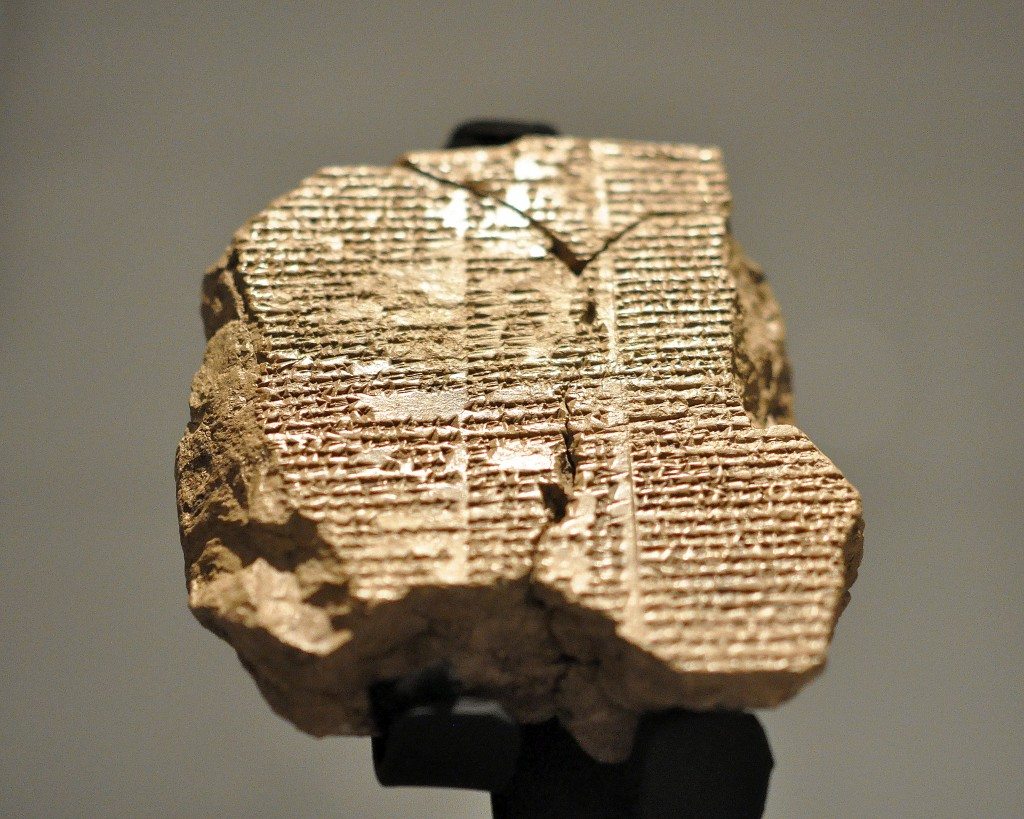
A newly discovered partially broken tablet V of the Epic of Gilgamesh: “the episode of the journey of Gilgamesh and Enkidu.” According to Professor Farouk Al-Rawi (of the School of Oriental and African Studies, University of London), this tablet narrates how Gilgamesh and Enkidu enter the cedar forest and kill Humbaba. Professor Al-Rawi also said that the tablet mentions that Gilgamesh and Enkidu saw a “monkey”; this is not mentioned in the other available versions of tablet V. The tablet dates back to the Old Babylonian period, 2003-1595 BCE. From Mesopotamia, Iraq. (The Sulaymaniyah Museum, Iraq). Photo © Osama S. M. Amin.
Neo-Sumerian Golden Earrings
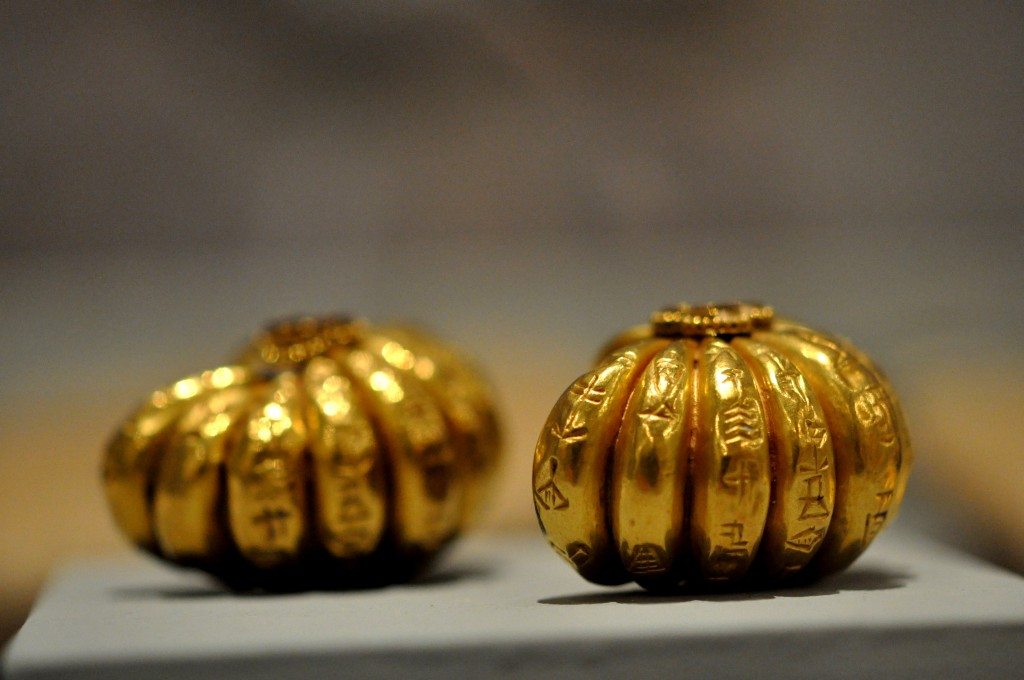
A pair of golden earrings in the shape of half pumpkins. The overlying decorative cuneiform inscriptions on the earrings mention that these earrings were a gift from Shulgi, King of Ur. From Mesopotamia, Neo-Sumerian period, Ur III, reign of King Shulgi, 2029-1982 BCE. (The Sulaymaniyah Museum, Iraq). Photo © Osama S. M. Amin.
Stela of Iddi-sin
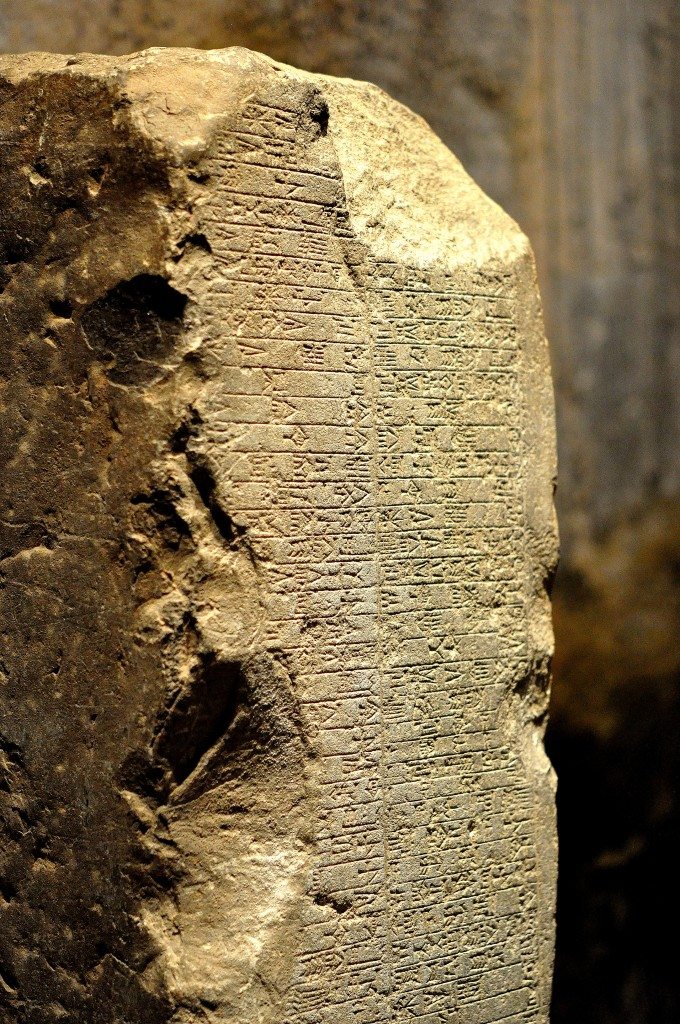
This is a close-up image of the upper two thirds of the stela of Iddi-sin, King of Simurrum. It celebrates and commemorates the victories of this king against his enemies, mostly tribes of West Iran. The stela is carved with 108 lines of cuneiform inscriptions and was found at modern-day Qara-chatan village in the mid-1980s CE (during the Iraq-Iran war), near Pira-Magrun Mountain, Sulaymaniyah Governorate, Iraq. Martyr Gareeb Haladnay and one of his friends found the stela and kept it in a safe place. In spite of various offers to sell the stela, they declined and Martyr Gareeb handed it over to the Sulaymnaiyah Museum in 1993 CE, just few days before his assassination. Old-Babylonian period, 2003-1595 BCE. (The Sulaymaniyah Museum, Iraq). Photo © Osama S. M. Amin.
Hurrian Incense Burner
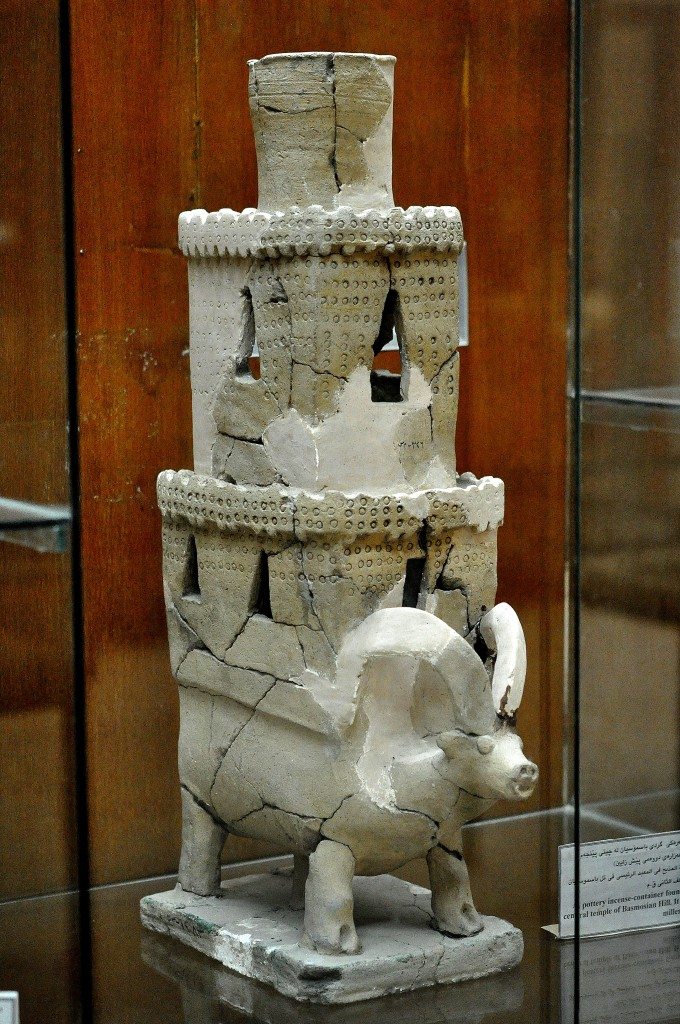
An incense burner which was found at layer five of the altar platform of the central temple of Tell Basmosian (modern-day Lake Dukan, Sulaymaniyah Governorate, Iraq), Mesopotamia, Hurrian period, 2nd millennium BCE. (The Sulaymaniyah Museum, Iraq). Photo © Osama S. M. Amin.
Door Lintel
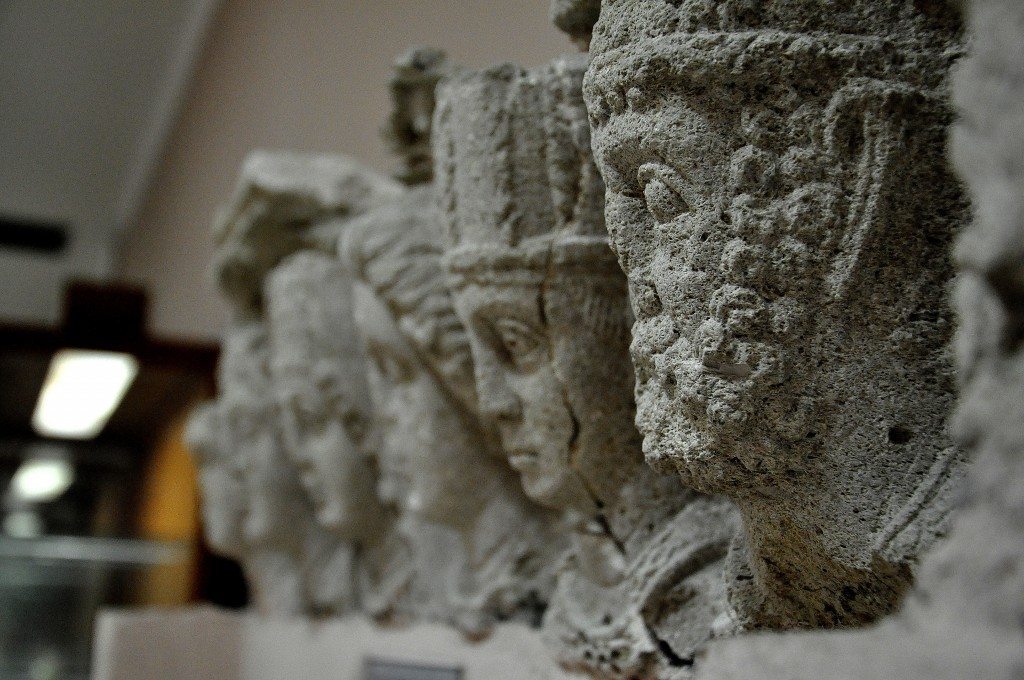
This door lintel was sculpted with the shape of different gods’ heads. Each god represents one day of the week. 2nd to 3rd century CE. From Hatra, Modern Al-Jazeera Region, Ninawa Governorate, Iraq. (The Sulaymaniyah Museum, Iraq). Photo © Osama S. M. Amin.
Necklace Reconstruction
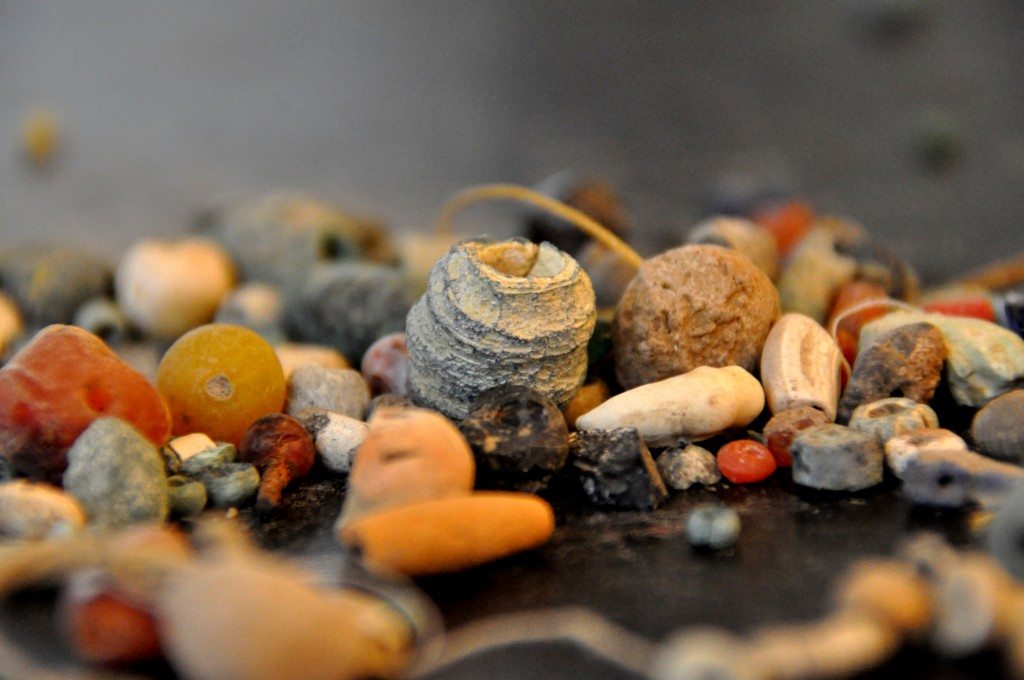
One of the museum’s staff is about to reconstruct a necklace; it was a new acquisition. Date and place of manufacture are unknown. Regular visitors and tourists have no access to this room, where the museum’s staff reconstructs and restore excavated artifacts. The Sulaymaniyah Museum, Iraq. Photo © Osama S. M. Amin.
Old Babylonian Clay Tablet
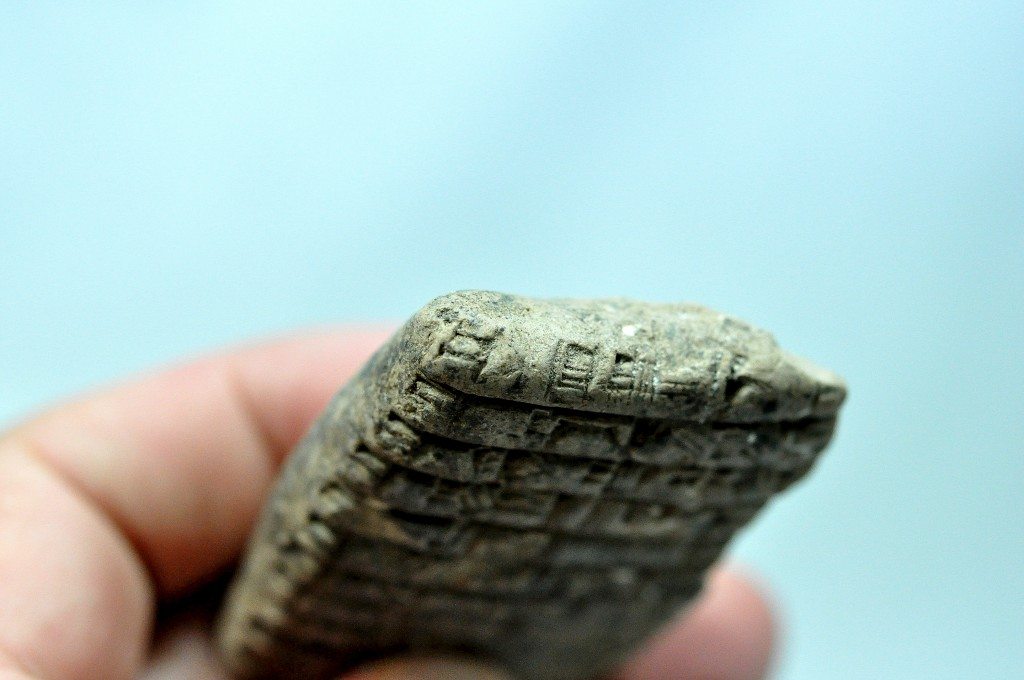
Dr. Laith Hussein, a German archaeologist, is analyzing this Mesopotamian clay tablet which dates back to the Old-Babylonian period, 2003-1595 BCE. I’m holding the tablet; what a feeling! The Sulaymaniyah Museum, Iraq. Photo © Osama S. M. Amin.