
Author: Carole Raddato
-
Art and Sculptures from Hadrian’s Villa: Marble head of Hypnos
This week’s sculpture from Hadrian’s Villa is a marble head of Hypnos, the Greek god of Sleep. Hypnos is represented as a young man with wings attached to his temples (now lost). The head must have been part of a full length statue showing Hypnos running forwards, holding in his hands poppies and a vessel…
-
Art and Sculptures from Hadrian’s Villa: The Lansdowne Antinous
This week’s sculpture from Hadrian’s Villa is a marble head of Antinous depicted as the god Dionysos, the closest Greek equivalent to the Egyptian god Osiris. It was unearthed in 1769 during excavations undertook by the art dealer and archaeologist Gavin Hamilton who secured it for Lord Lansdowne. The latter was an avid collector of…
-
Exploring Verulamium, the Roman City of St Albans (UK)
Anyone with an interest in Roman Britain should have St Albans on top of their list of places to visit. I myself visited St Albans twice and enjoyed it on both occasions. A short train ride north of London, St Albans is a must-see site. There are a few remains of the Roman town still…
-
The Ancient People of Palmyra, Syria
The recent developments in the Middle East have drawn the attention of the world to the magnificent ruins of the ancient city of Palmyra. Its impressive remains were brought to light by travellers, first in 1678, and by archaeologists in more recent times. Equally impressive are the numerous representations of the inhabitants of the city…
-
The Temple of Hadrian at Ephesus, Ionia (Turkey)
The Temple of Hadrian at Ephesus is regarded one of the most famous monuments of the ancient city of Ephesus. It lies on the south side of Curates Street, one of Ephesus’ main arteries connecting the Gate of Hercules with the Library of Celsus.
-
The Nerva-Antonines in Florence
The Galleria degli Uffizi in Florence is one of the oldest and most famous art museums in the world. In addition to Renaissance masterpieces including works from Botticelli, Michelangelo and Leonardo da Vinci, the Uffizi houses one of the world’s most important collections of ancient Roman and Greek statues. The Medicis’ interest in ancient art started…
-
Art and Sculptures from Hadrian’s Villa: Marble Head of Antinous
This week’s sculpture from Hadrian’s Villa is a marble head of Antinous, one of the ten marble images of Antinous found there. This portrait of Antinous is conserved in the Palazzo Massimo alle Terme in Rome. It is related to a coin type minted in the city of Adramyttium in Mysia (modern Edremit, Turkey) by…
-
7 Roman Wonders from the Corinium Museum in Cirencester (UK)
Each year Twitter has an event for international Museum Week (#MuseumWeek), which celebrates the many museums, galleries and cultural institutions that make valuable contributions to the arts, history and culture around the world. More than 2,200 museums, galleries and cultural institutions from over 64 countries come together on Twitter for #MuseumWeek including the Corinium Museum in…
-
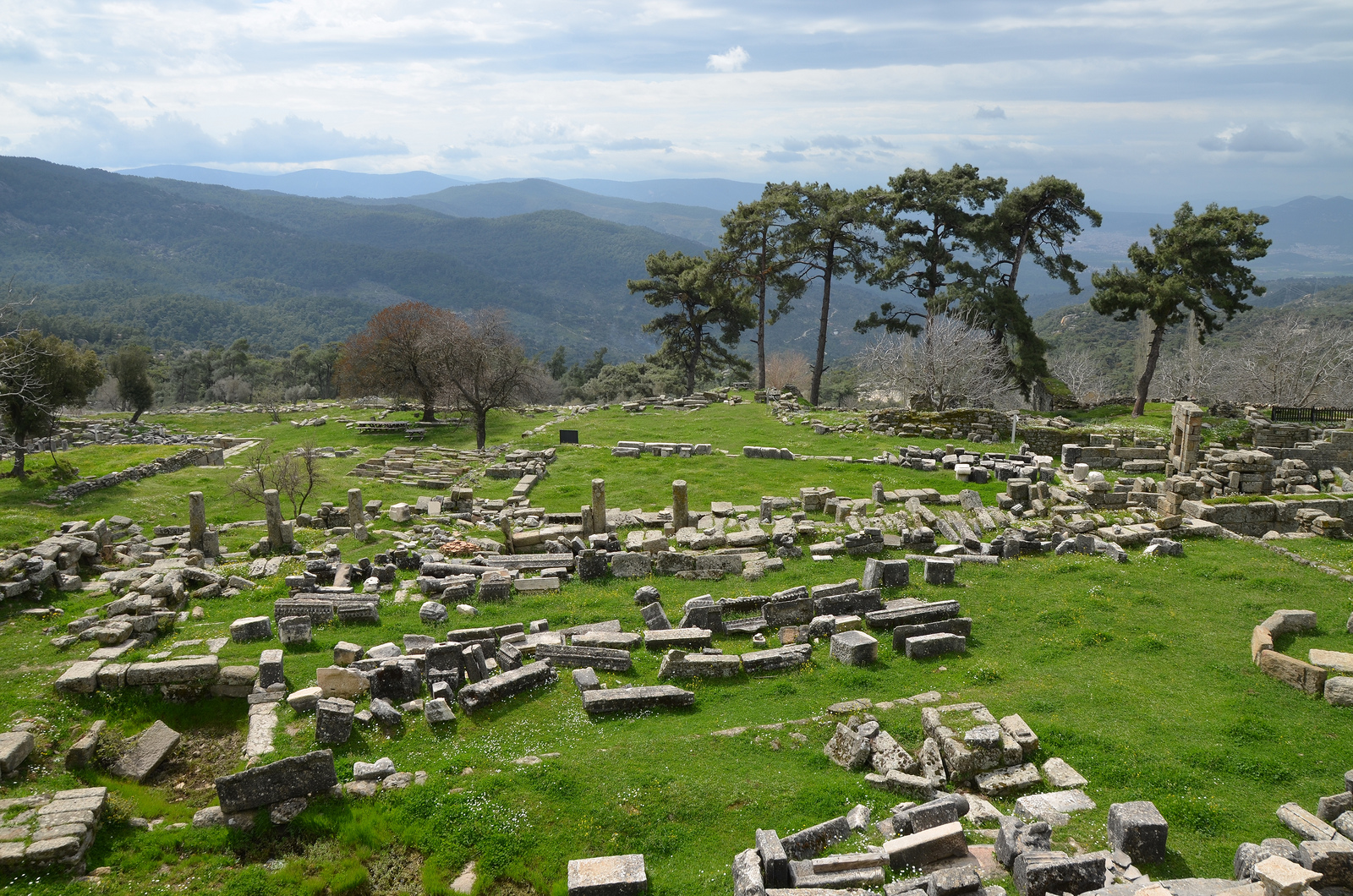
10 Hidden Ancient Treasures in Caria, Turkey
Located at the crossroads of many ancient civilizations, Turkey is a haven for archaeology lovers. Over the centuries, a succession of empires and kingdoms – Hittite, Lydian, Persian, Greek, Roman, Byzantine and, finally, Ottoman – ruled over Anatolia. The country’s unique cultural legacy, its remarkably beautiful landscape as well as the friendliness of its people…
-
Art and Sculptures from Hadrian’s Villa: Marble Head of a Companion of Odysseus
This week’s sculpture from Hadrian’s Villa is a marble head of a companion of Odysseus, copied after a famous work from the Hellenistic period. This head shows the face of a man that probably belonged to a multi-figure group depicting Odysseus with his twelve companions blinding the one-eyed giant (and the most famous of the Cyclopes),…