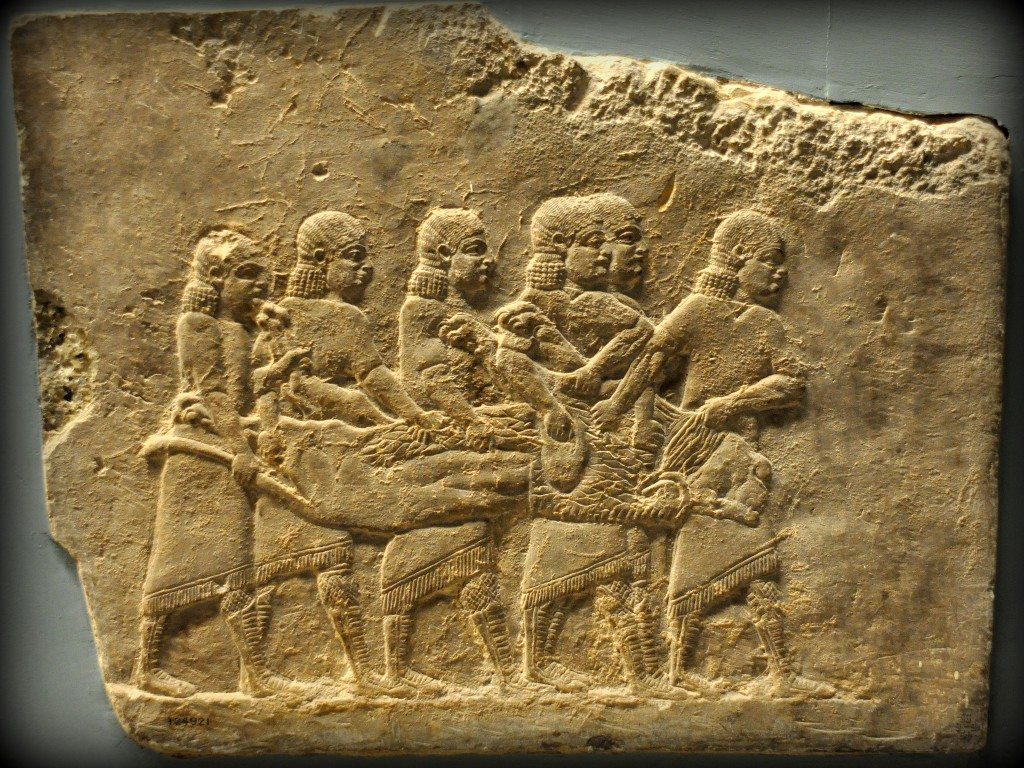
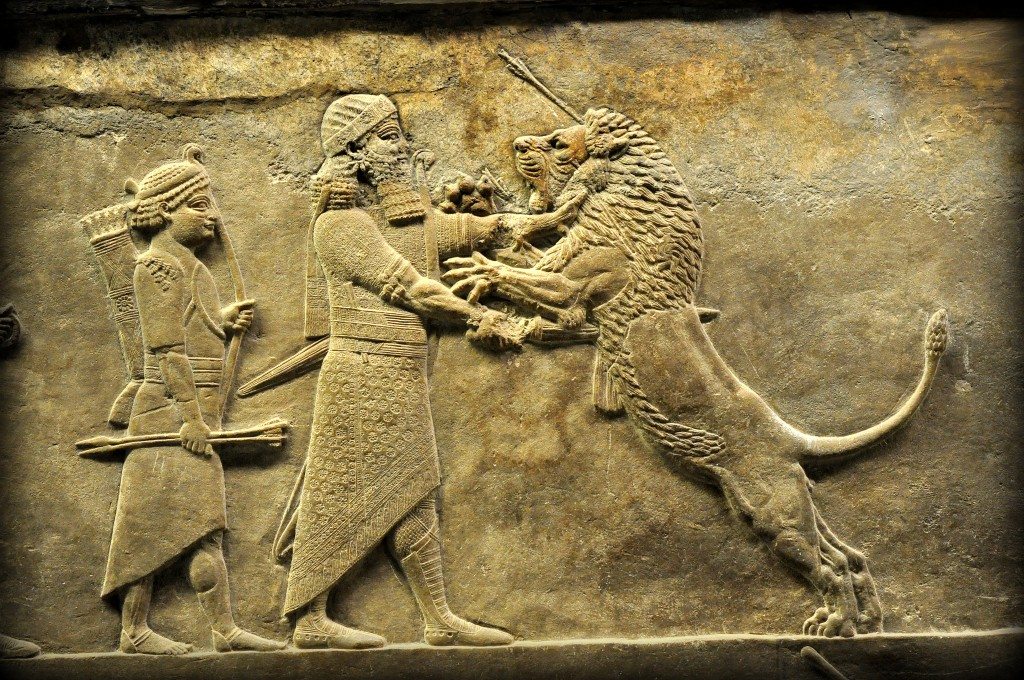
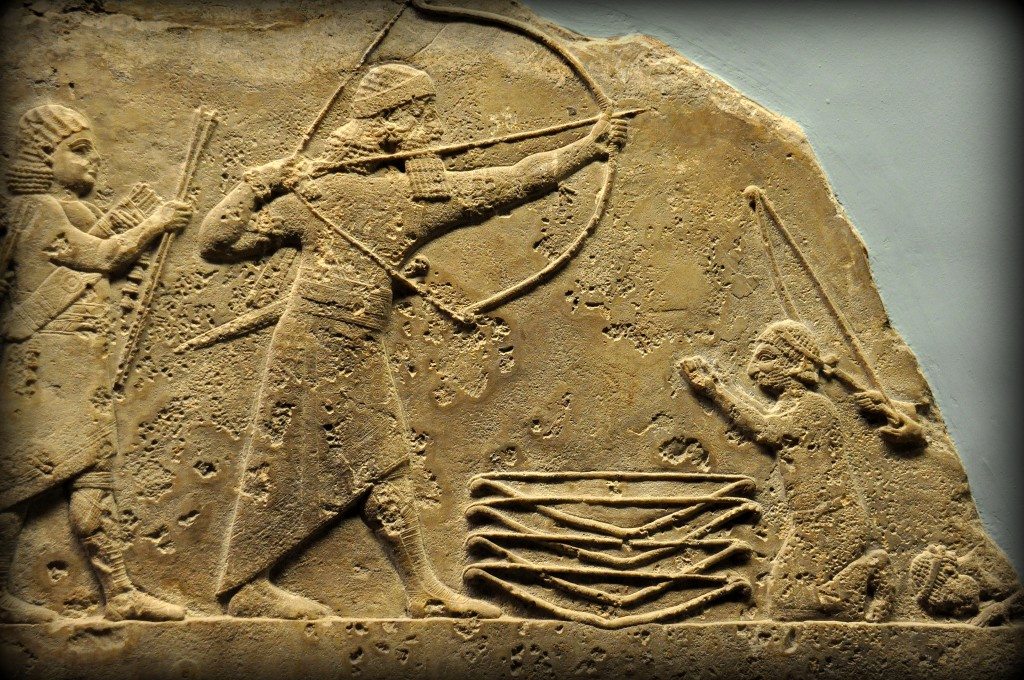
Whoever was privileged to gain access to the North Palace of the Assyrian king Ashurbanipal at Nineveh, could consider himself part of something timeless. Thanks to the great work of Hormuzd Rassam (1826-1910), who unveiled a large number of alabaster bas-reliefs, which once decorated the walls of that king’s Palace (built around 645 BCE); the Assyrian lion-hunting scenes!
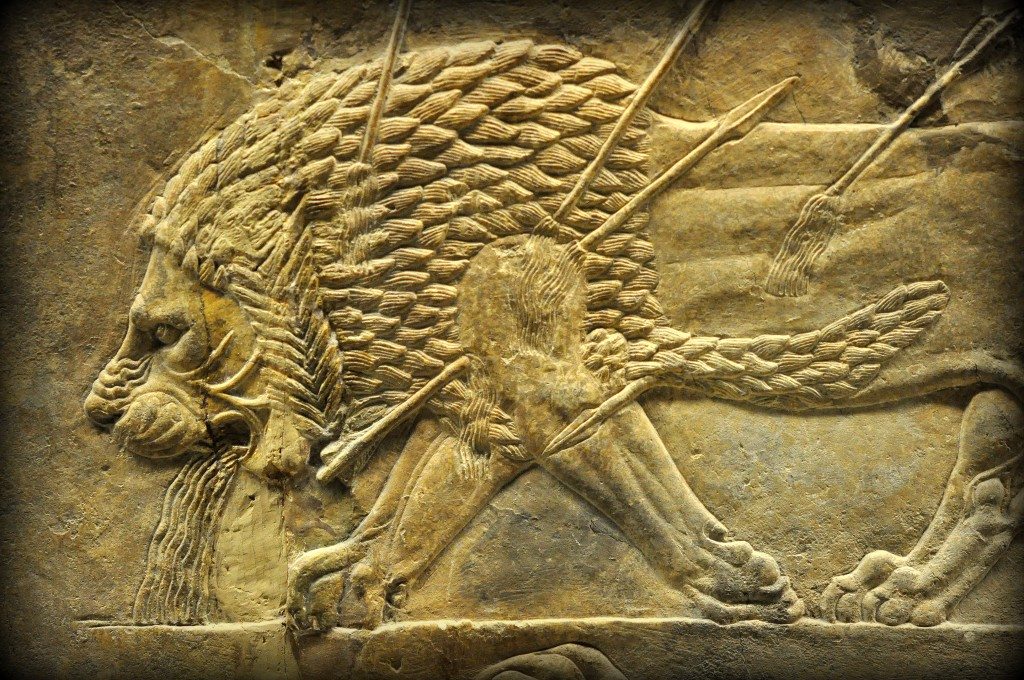
These extraordinary carvings, so dynamic and full of movements, are so realistic and so accomplished and are some of the most remarkable ancient artifacts ever found. They were discovered by Rassam in the year 1853 and have been housed in the British Museum since 1856. Rassam stated in his autobiography that “one division of the workmen, after 3-4 hours of hard labor, were rewarded by the grand discovery of a beautiful bas-relief in a perfect state of preservation”. Rassam ordered his men to dig a large hole in the mound; after more than 2,000 years, the remains of a royal palace were found. The mud-bricks had disappeared, of course, completely but the reliefs themselves, which once decorated them, have fortunately survived.
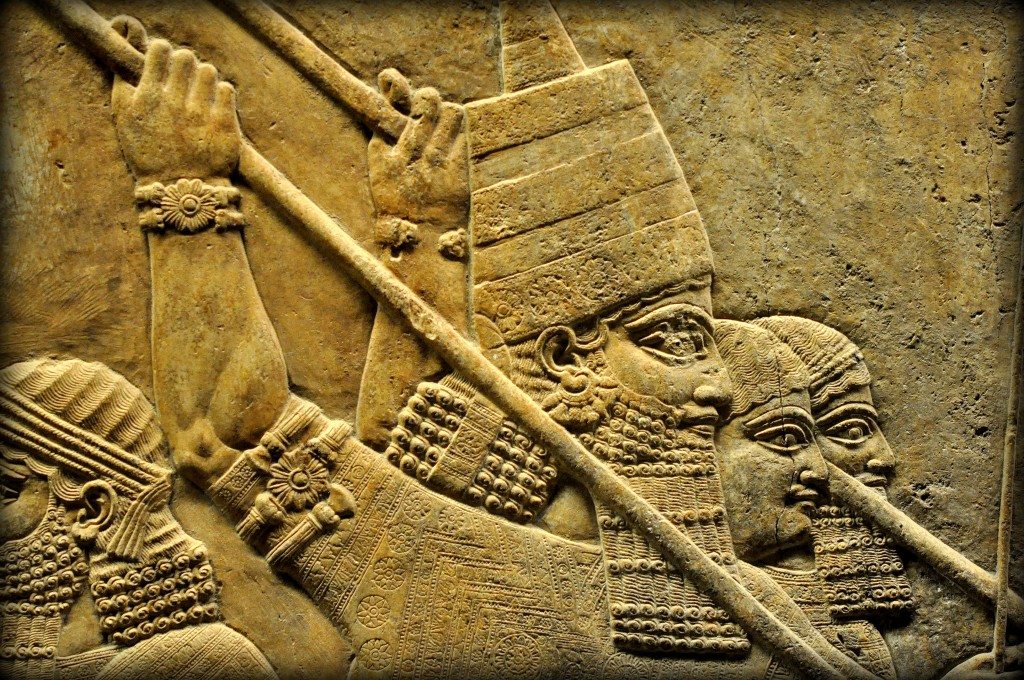
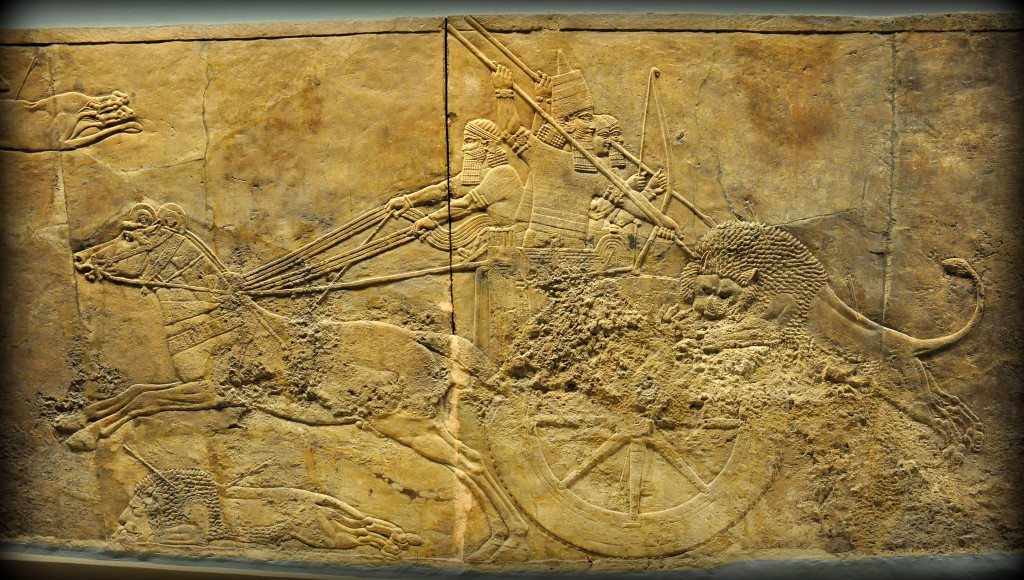
At the heart of the Assyrian galleries, Room 10a of the British Museum in London, these stone slabs stand on either wall of the room. They depict a group of warriors led by a taller figure, who wears a conical hat; this is their king. The men appear to hunt a large number of lions. Rassam, initially, did not recognize who is the king. He made copies of the cuneiform inscriptions written on the Palace’s reliefs and sent them to Henry Rawlinson (1810-1895), the British consul in Baghdad. Rawlinson could read cuneiform and wrote back to Rassam saying that this is a palace of Ashurbanipal; nothing was much known about Ashurbanipal when his name first came to light!
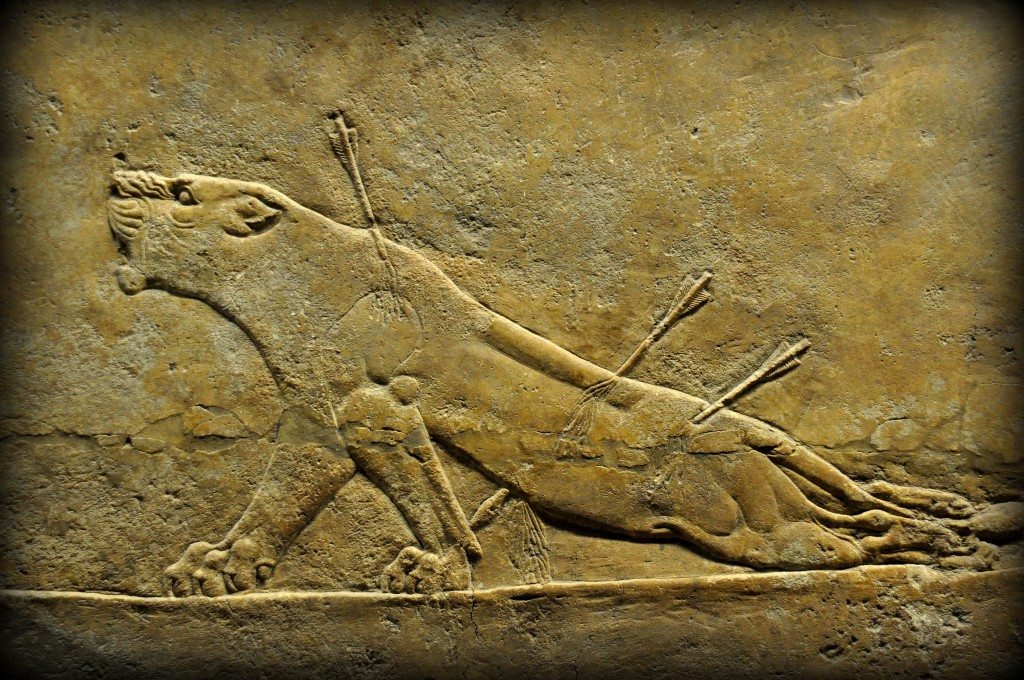
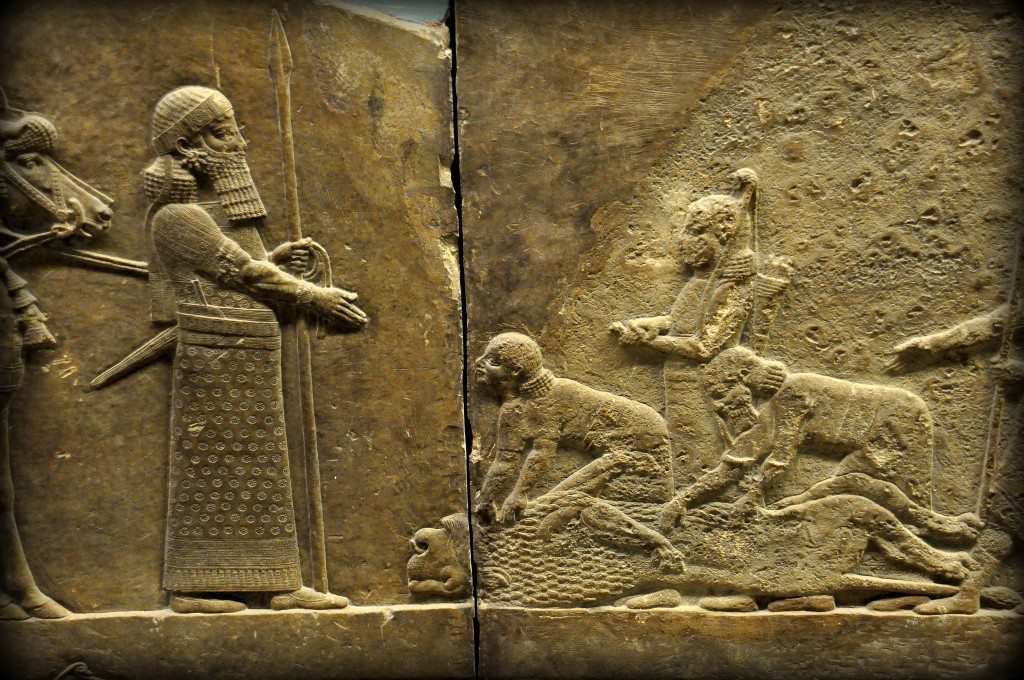
It is believed that the objective was not to generate pity for the dying creatures but rather to highlight their raw, dangerous presence and to show how they collapse in agony at the hands of the Assyrian king who, through the support of the gods and his skill with weapons, brings civilization to the chaotic and disordered world that the animal represent.
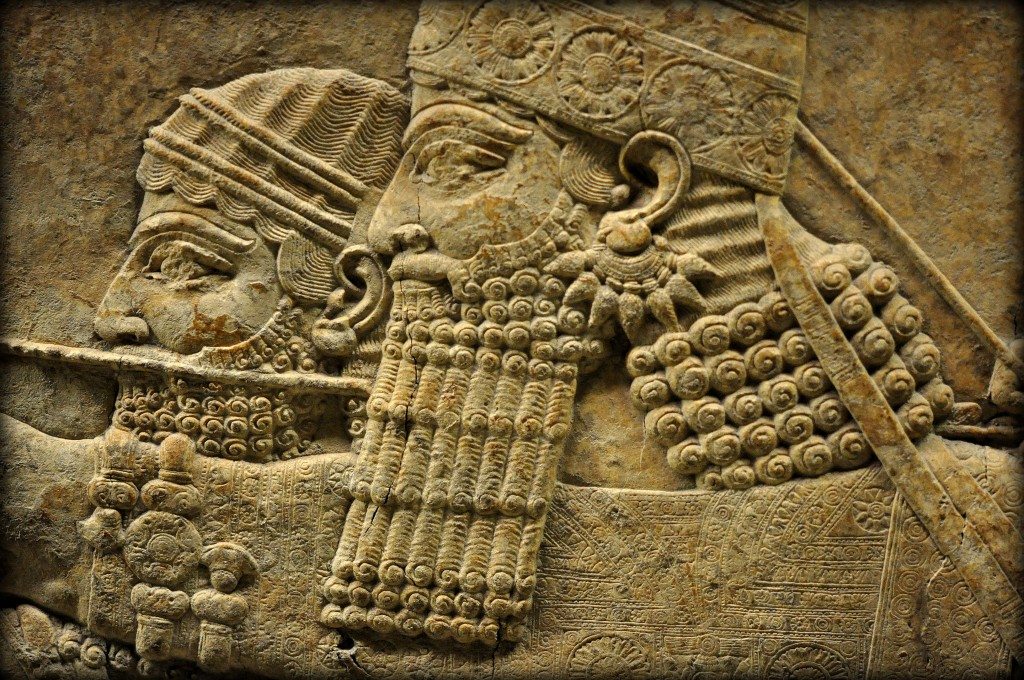
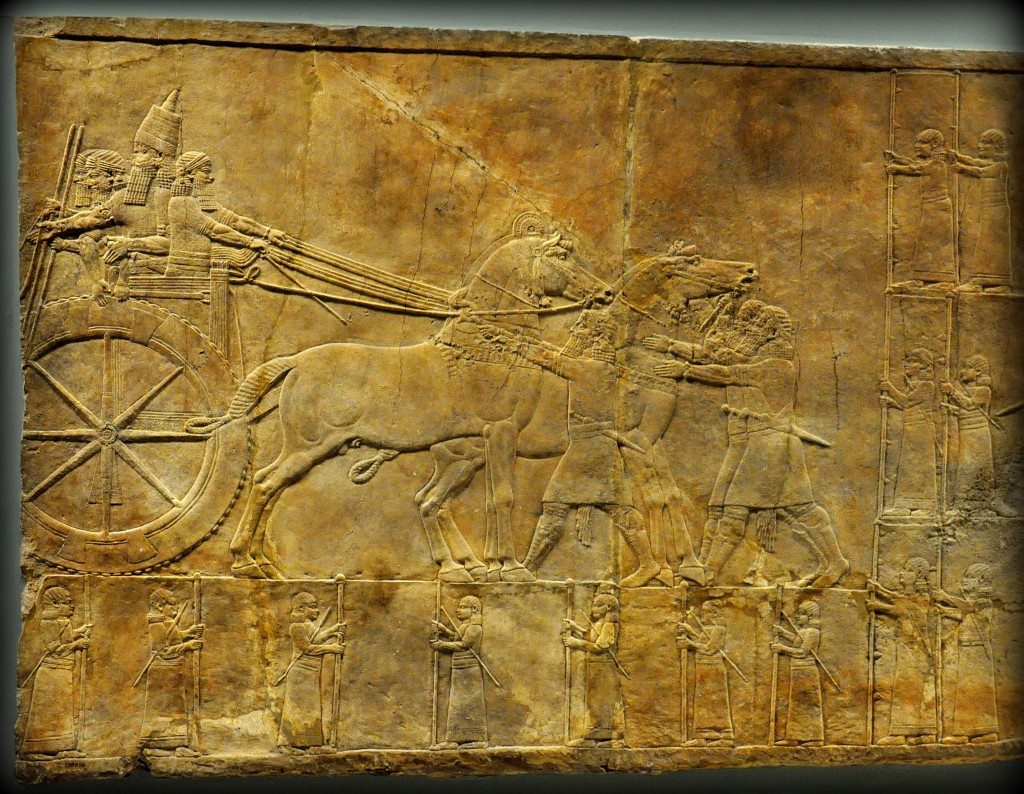
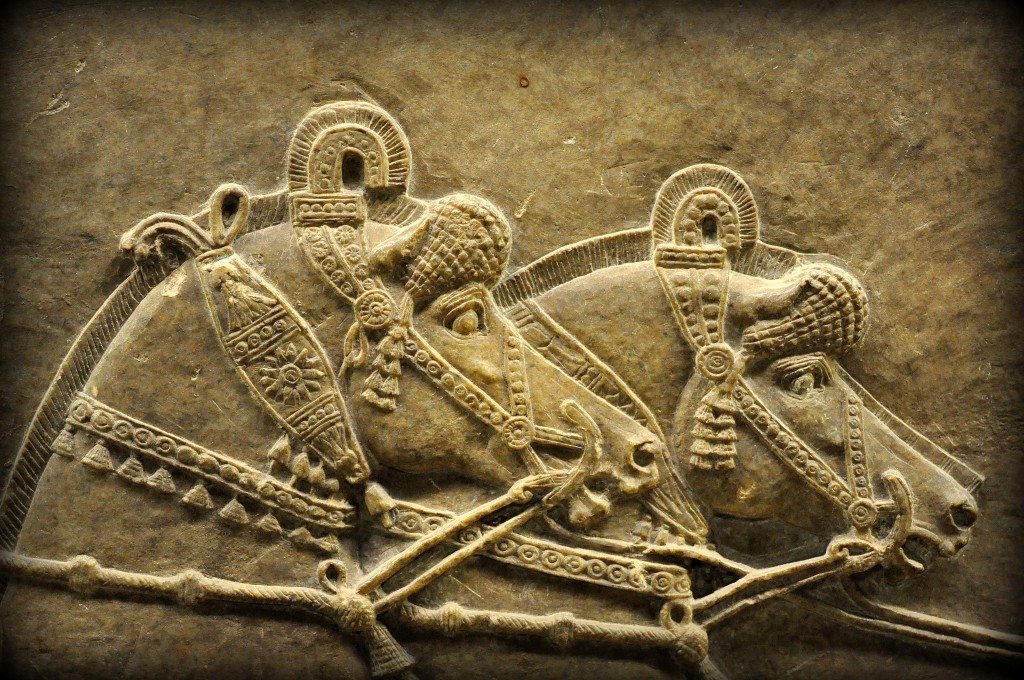
Ashurbanipal was depicted many times (riding a royal chariot, standing on his feet on earth, and on the back of his galloping horse); his overall costume, face, beard, and gestures were carved very exquisitely and vividly. But even though the king does matter a lot; it is these lions which form the core of the scenes.
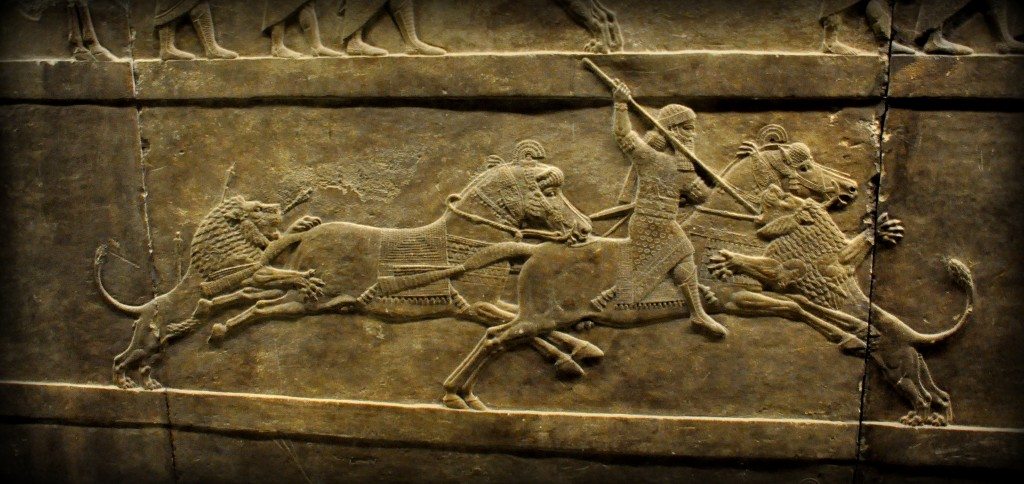
A single artist is thought to have created these reliefs, helped by many assistants; it is also thought that the king himself might at times intervened in order to add/change some of the details of the imagery. The hunt scenes, full of tension and realism, rank among the finest achievements of the Assyrian Art. They depict the release of the lions, the ensuing chase, and their subsequent killing.
Although very brutal and bloody, the “massacre” appears very beautiful! Was this the intention of the sculptor? These slabs decorated both walls of a corridor within the palace (Room C) and a private gate-chamber (Room S). Apart from the king, his courtiers, and some of his visitors, who else could have accessed them? The public? Whom to impress, in other words? The sculptor was cleverly pointing out the contrast between the cruel king and his noble victims; however, the people for whom the scenes were designed saw the king as the paragon of nobility, and the lions as cruel enemies that should deserve painful, and even ludicrous, slaughtering.
The first documented scene of lion-hunting dates back to 3000 BCE; it was about a ruler who was hunting lions. The North-West Palace of the Assyrian king Ashurnasirpal II at Nimrud (883-859 BCE) housed few lion-hunting scenes, indicating that this act had been present for ages.
The hunting environment, Room C:
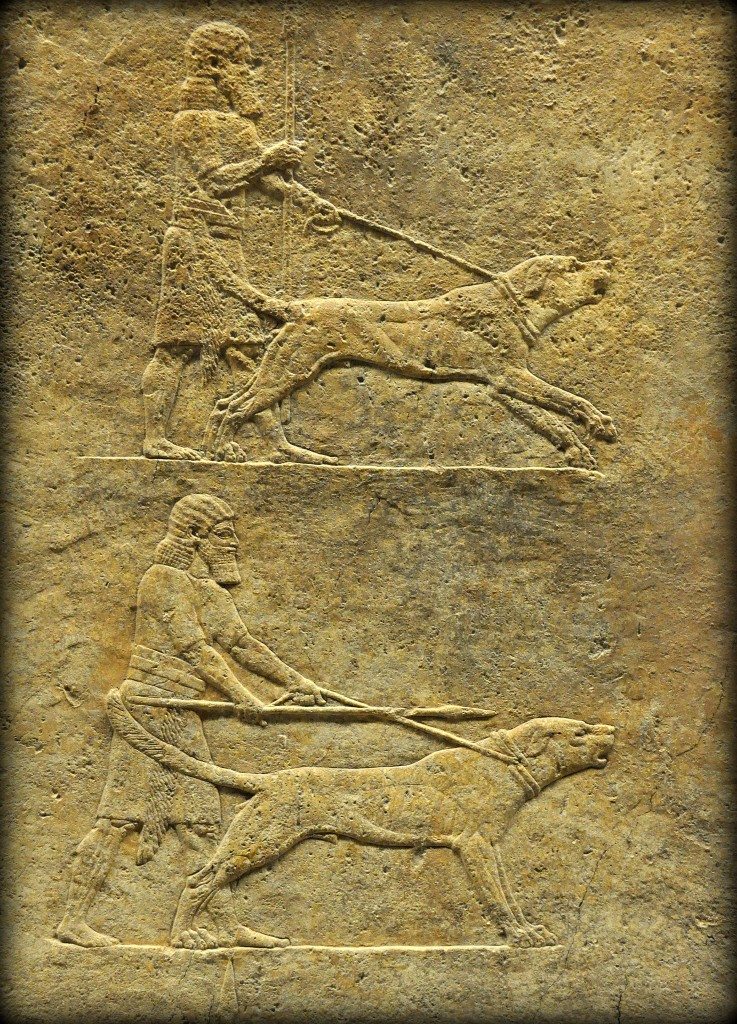
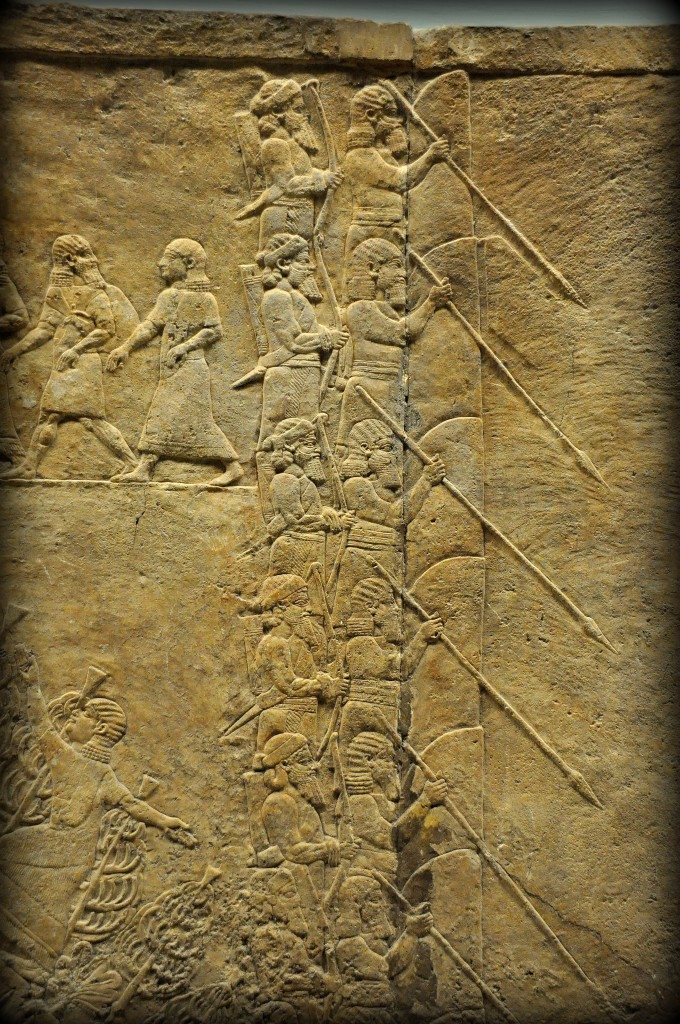
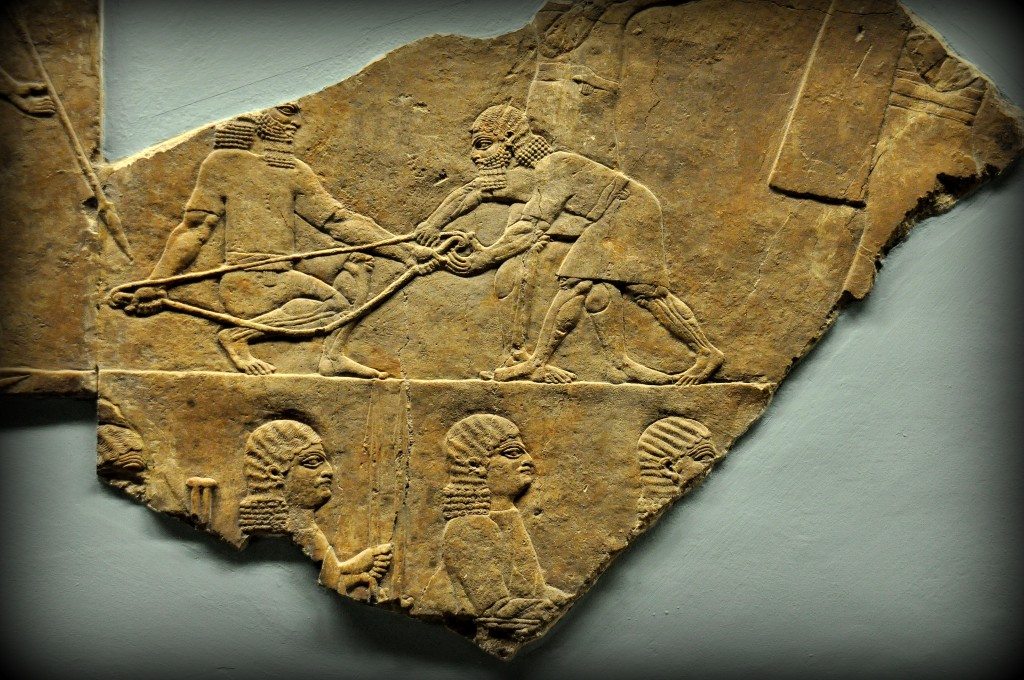
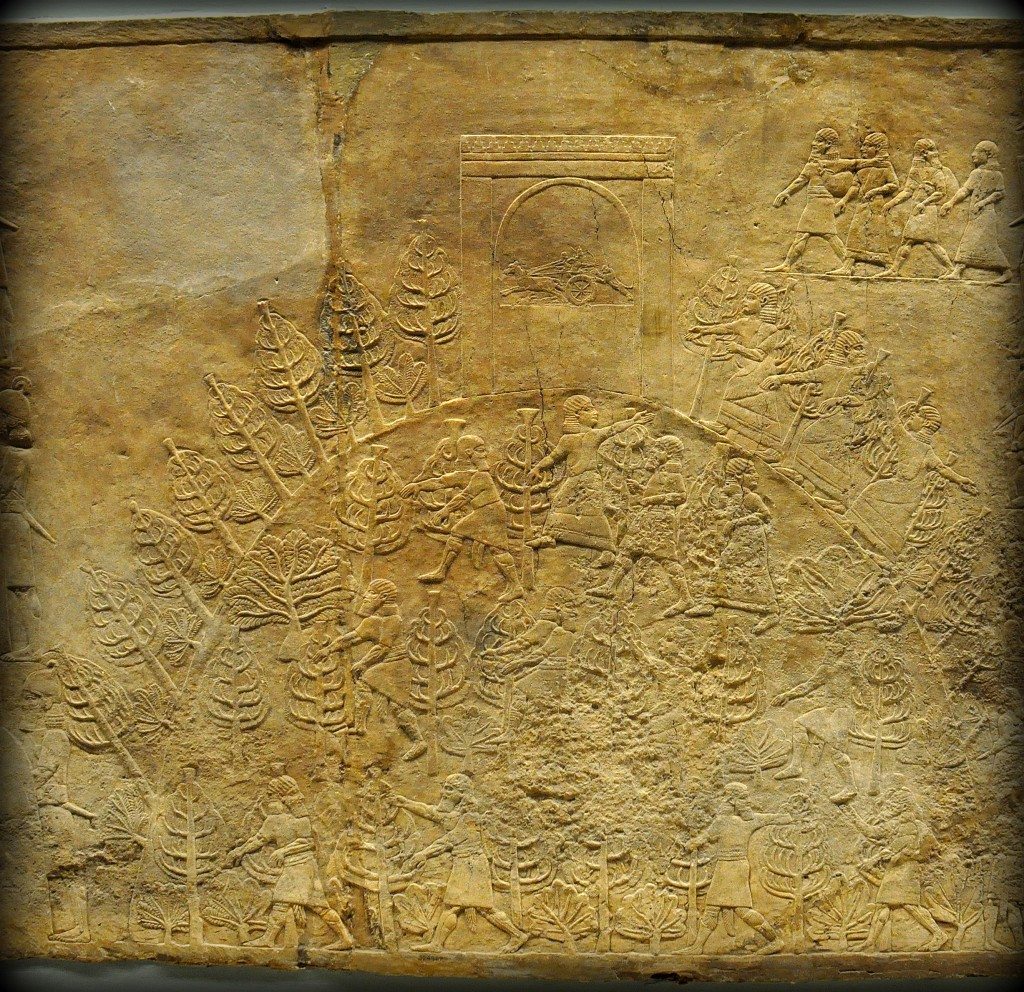
The arena is ringed by a double line of soldiers with high shields and bows/arrows, and at some points with keepers with dogs, to prevent lions escape the arena. The target audience, the public, is watching from a hill; men and women are scrambling up the slope, either in terror or to reach a point with a good view of the action that is about to begin. Meanwhile, the king and his accompaniments prepare themselves for the action; horses, bows, spears, and so on.
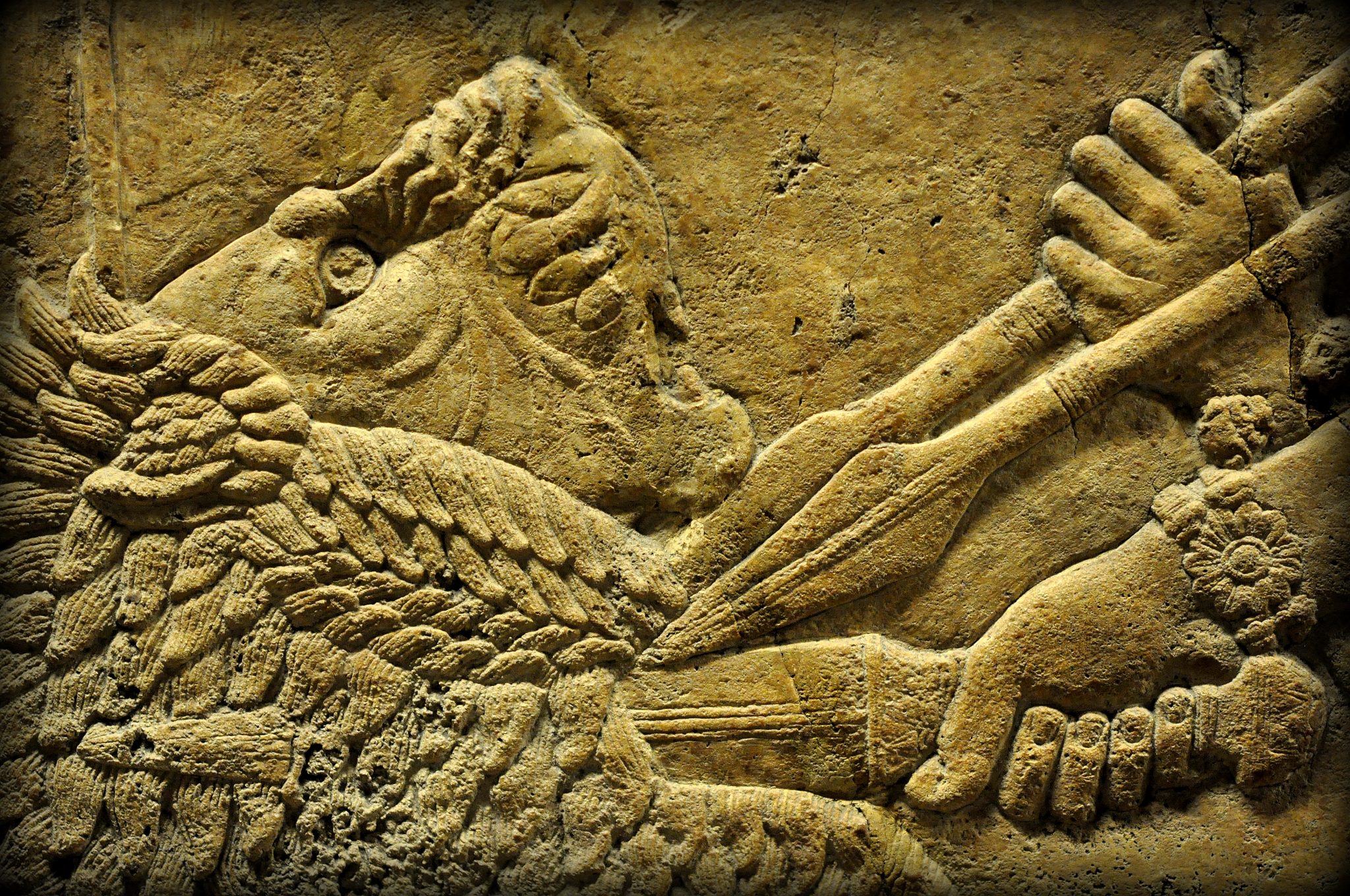
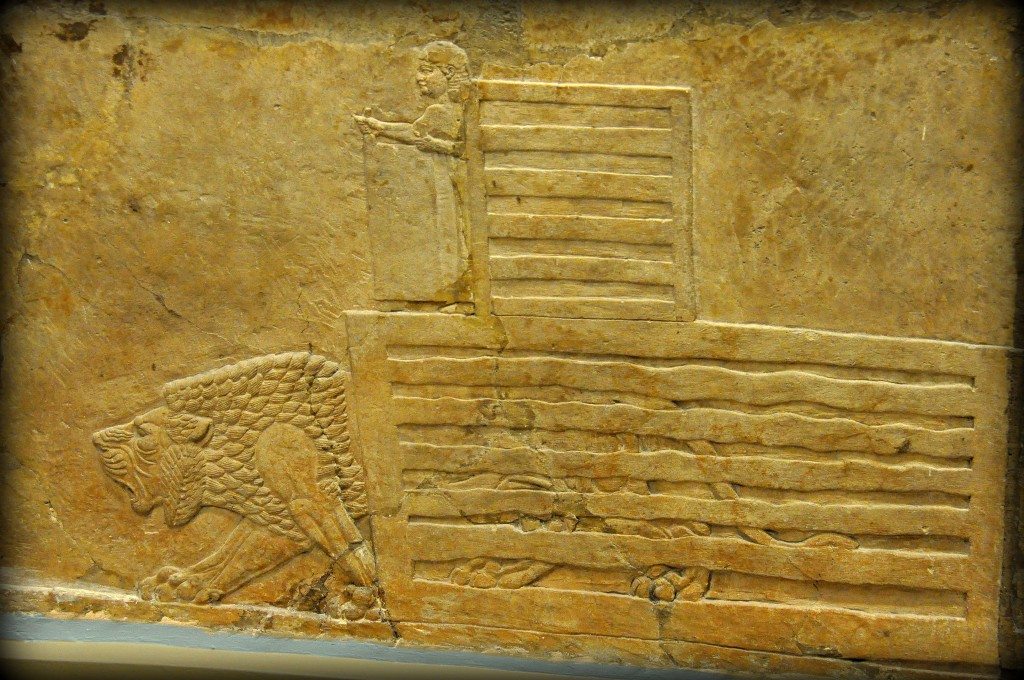
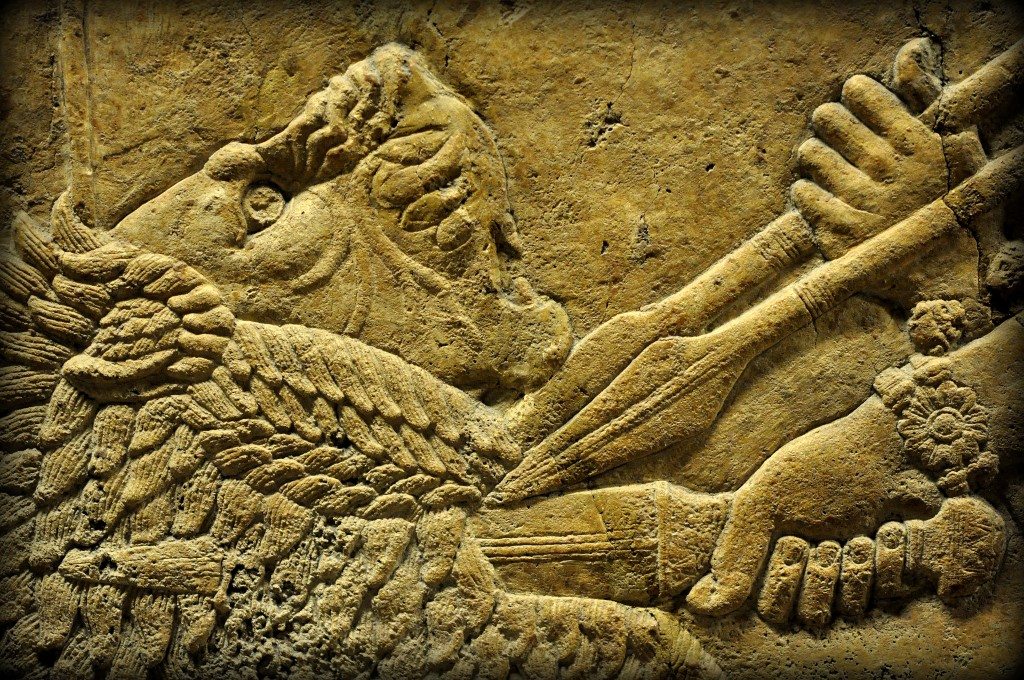
The lions and lionesses are not free within the wild forest; they are brought to the arena inside cages; this indicates that the animals were captured beforehand. A person, usually a child, lifts the trapdoor and releases the lion. Nearby horsemen drive/lure the lions towards the king and his guards to face their final destiny through a multitude of vivid, cinematic, and remarkably depicted painful scenes. The lions were depicted in many attitudes of fighting death (receiving and hit by arrows, spears, and/or swords) or they were already dead. The animals’ facial expressions and eyes were depicted in a very realistic way of horror, defeat, and agony. Overall, there are 18 lions/lionesses in this Room.
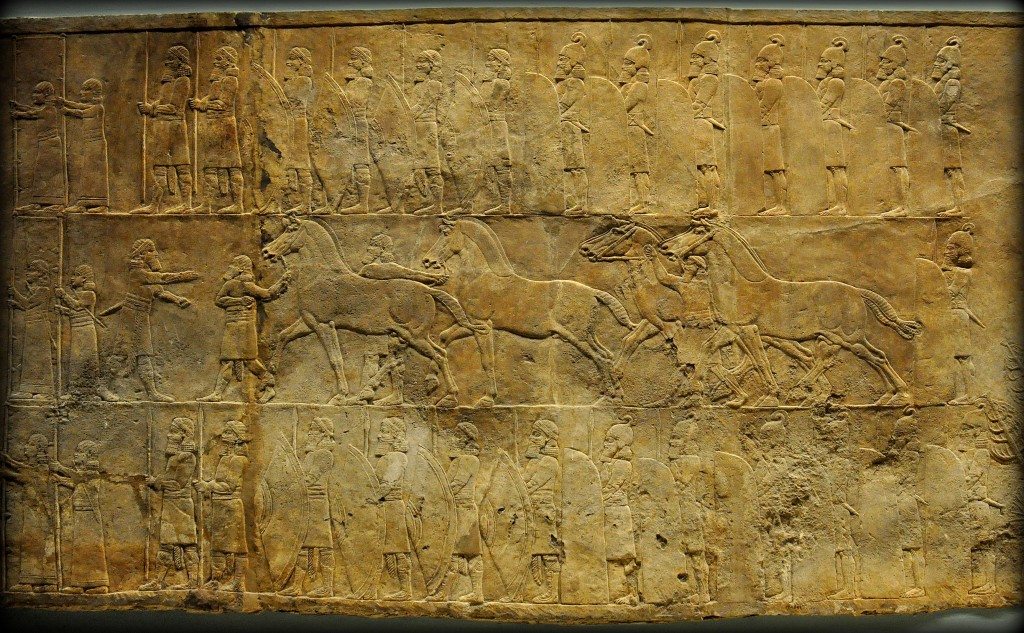
This private chamber-gate was decorated with relatively small scale hunt scenes, arranged in three parallel horizontal registers. None of the scenes here depicts a royal charter. Instead, the king appears to stand on earth or ride a galloping horse; he wears a diadem, not the typical conical head cap of Assyrian kings.
The king himself uses a variety of weapons, reflecting his superb abilities; a bow, sword, and spear. He was depicted three times on his royal chariot, guarded and helped by his men. At times, the king stands on his feet on earth and kills lions with a sword. He also rides a horse and uses a bow/spear to kill his prey. In one relief the king grasps a leaping lion from his neck with his left hand and stabs the lion forcefully and deeply with his sword in his right hand in a very dramatic event.
In all scenes, the king and his men appear rigid-faced and heartless. Had the king really faced these aggressive animals so closely and threatened his life? Had these men, all of them, encountered this large number of hostile animals, using their spears, arrows, and swords only? The artist/sculptor documented some “unexpected” and dangerous moments the king had faced. The reliefs from Room S were carved in three parallel registers and different scenes while the events on Panels from Room C occupied the whole slabs.
I was attending a symposium at the Royal College of Physicians of London. It was a great opportunity to visit, see, and feel this marvelous art from my land, Mesopotamia (Iraq)!
As an Iraqi citizen, I would like to sincerely thank all of those who were involved in the excavation, transportation, preservation, protection, and the display of this world-class ancient art! This history belongs to the whole world and humanity, not only to Iraq. Viva Mesopotamia, the Cradle of Civilization!