All posts filed under: Uncategorized

Ancient Greek Temples of the Mediterranean

Here is another image post for you all to enjoy, today’s topic is the Greek temples! Greek temples (naos – meaning dwelling place in reference to the belief that the god dwelt in that place, or at least temporarily visited during rituals) were places of formal worship. Each Greek community had its own sacred sites and temples which were looked after by priests.

The Rock Relief of Harir (Hareer), Iraqi Kurdistan

Thursday, September 25, 2014 I was attending a neurology symposium in Erbil (Hawler), the capital of Iraqi Kurdistan. ِAfterwards, I headed to one of my relatives’ to pay him a visit; my family was with me. My relatives insisted we should stay in their home and spend a couple of days with them. And I thought, why not! At night, I surfed the net about rock reliefs in Iraqi Kurdistan and found one result that told of a relief in the village of Hareer called Rock Relief of Harir (Arabic: منحوتة حرير; Kurdish: نه خشي هه رير). I wondered what it was. I tried desperately to find any additional useful information about this relief, but I was unsuccessful! Friday, September 26, 2014 My relative, Dana Hiwa and I drove my car to the village of Hareer (or Harir; Arabic حرير; Kurdish هه رير). It was north to the city of Hawler about an hour and a half by car (36°33’48.47″N; 44°20’53.52″E). As there were no clues, I was not able to find the precise location of …

Art and Sculptures from Hadrian’s Villa: Marble head of Hypnos

This week’s sculpture from Hadrian’s Villa is a marble head of Hypnos, the Greek god of Sleep. Hypnos is represented as a young man with wings attached to his temples (now lost). The head must have been part of a full length statue showing Hypnos running forwards, holding in his hands poppies and a vessel from which he presumably poured a sleeping potion. One of the most complete representations of Hypnos is a bronze statuette from the collection of the Roman Museum in Augst (see an image here).

Viking Age Food and Cuisine

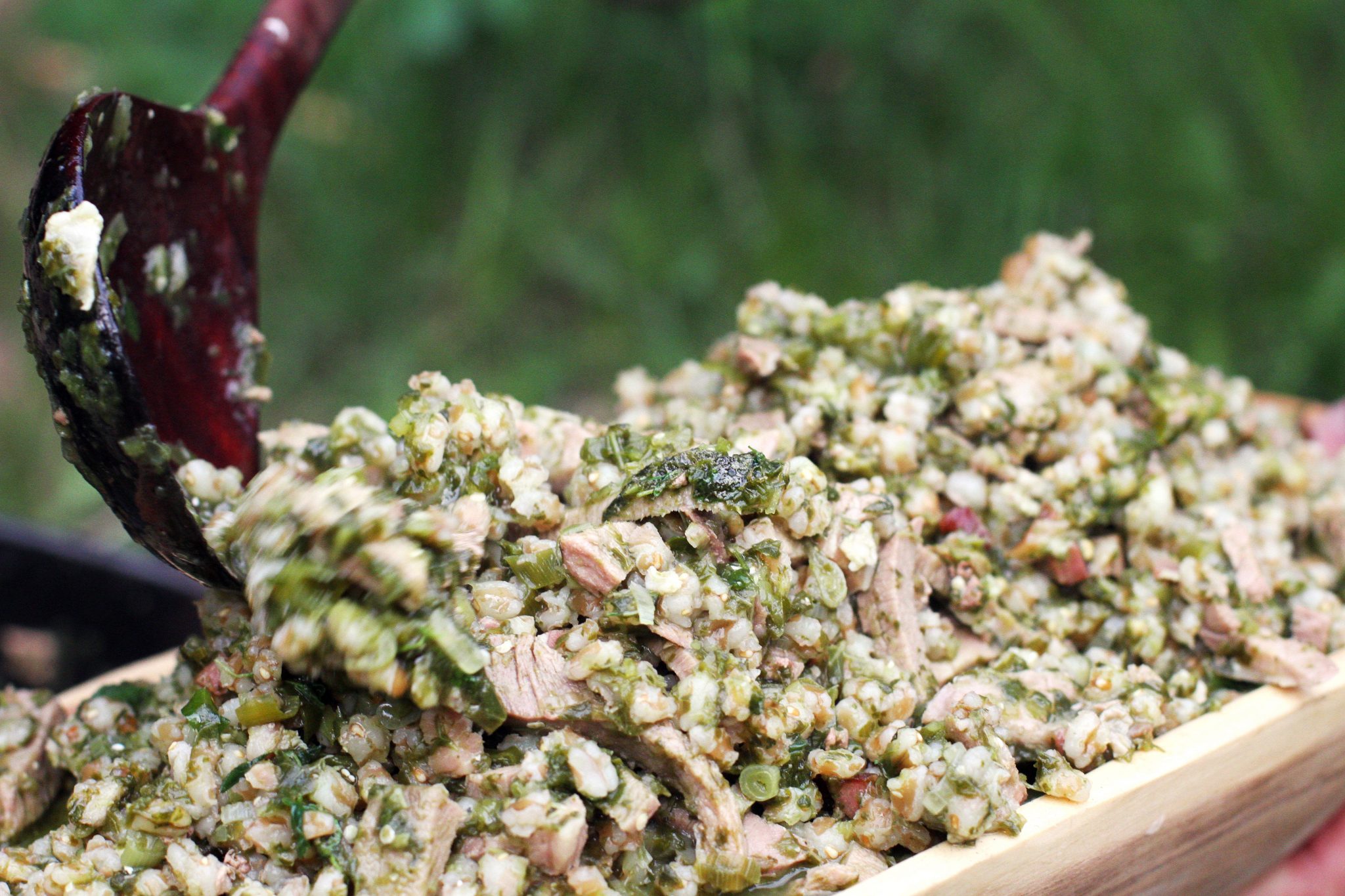
An Early Meal: A Viking Age Cookbook & Culinary Odyssey by Daniel Serra and Hanna Tunberg introduces readers to Viking Age food and cuisine from early medieval Scandinavia. Thoroughly based on archaeological finds, historical cooking methods, and current research, the book is a must-read for those interested in Old Norse culture and food history. Within its pages, the authors dispel many of the prevalent myths that persist about Viking Age food and cookery, share reconstructed recipes, and impart new information drawn from years of experimental research in the field. In this exclusive 2015 holiday season interview, Daniel Serra discusses Viking Age food and Old Norse culture with James Blake Wiener of Ancient History Encyclopedia (AHE).

Art and Sculptures from Hadrian’s Villa: The Lansdowne Antinous

This week’s sculpture from Hadrian’s Villa is a marble head of Antinous depicted as the god Dionysos, the closest Greek equivalent to the Egyptian god Osiris. It was  unearthed in 1769 during excavations undertook by the art dealer and archaeologist Gavin Hamilton who secured it for Lord Lansdowne. The latter was an avid collector of antiquities and owned a fine collection of classical sculpture until most of it was sold and dispersed in 1930 (including the Lansdowne Amazon and the Lansdowne Hercules). Today the Lansdowne Antinous graces the “Greece and Rome” room of the Fitzwilliam Museum in Cambridge, England.

Ancient Hairstyles of the Greco-Roman World

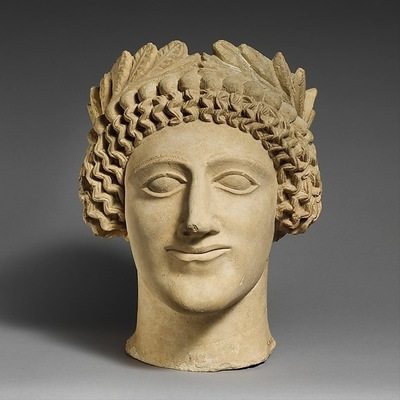
From the dawn of civilization to the present day, human hair has seldom been worn in its natural state. Whether cut, shorn, curled, straightened, braided, beaded, worn in an upsweep or down to the knees, adorned with pins, combs, bows, garlands, extensions, and other accoutrements, hairstyles had the power to reflect societal norms. In antiquity, ancient hairstyles and their depictions did not only delineate wealth and social status, or divine and mythological iconography; they were also tied to rites of passage and religious rituals. Hair in the Classical World, now on view at the Bellarmine Museum of Art (BMA) in Fairfield CT, is the first exhibition of its kind in the United States to present some 33 objects pertaining to hair from the Bronze Age to Late Antiquity (1500 BCE-600 CE). The exhibition takes the visitor on a rich cultural journey through ancient Greece, Cyprus, and Rome, in an examination of ancient hairstyles through three thematic lenses: “Arrangement and Adornment”; “Rituals and Rites of Passage”; and “Divine and Royal Iconography.” In this exclusive 2015 holiday season …

Reading Ancient History: Reference Books

In today’s blog post we’ll be looking at Ancient History Reference books particularly five excellent ones which will help any reader to understand the ancient world around the Mediterranean. The Oxford Classical Dictionary If there was ever a book that covered just about everything there was to know about Roman and Greek cultures, this is it. This is the 4th edition of the Oxford Classical Dictionary and it contains around 75 new additions. Though a weighty tome each student studying the classics should have this as a reference book for their studies! Buy it here through AHE’s bookstore.      

Exploring Verulamium, the Roman City of St Albans (UK)

Anyone with an interest in Roman Britain should have St Albans on top of their list of places to visit. I myself visited St Albans twice and enjoyed it on both occasions. A short train ride north of London, St Albans is a must-see site. There are a few remains of the Roman town still visible (Verulamium), such as parts of the city walls, a hypocaust in situ under a mosaic floor, but the most spectacular are the remains of the Roman theatre. In its heyday Verulamium was the third largest city in Roman Britain. The city was founded on the ancient Celtic site of Verlamion (meaning ‘settlement above the marsh’), a late Iron Age settlement and major center of the Catuvellauni tribe. After the Roman invasion of 43 AD, the city was renamed Verulamium and became one of the largest and most prosperous towns in the province of Britannia. In around AD 50, Verulamium was granted the rank of municipium, meaning its citizens had “Latin Rights”. It grew to a significant town, and as such …

Gold Artifacts from the Ancient Philippines

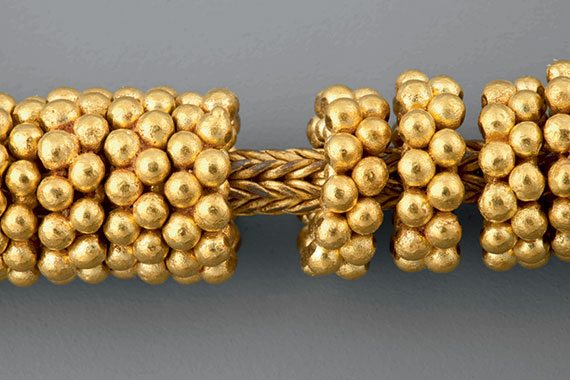
The kingdoms of the ancient Philippines were populated by advanced societies with superior metallurgical technology long before the arrival of Ferdinand Magellan and Spanish explorers in 1521 CE. This fall, New York City’s Asia Society Museum presents an exhibition of spectacular works of gold — including exquisite regalia, jewelry, functional and ritualistic objects, ceremonial weapons, and funerary masks — from collections in the Philippines and United States: Philippine Gold: Treasures of Forgotten Kingdoms. In this exclusive interview, James Blake Wiener of Ancient History Encyclopedia speaks to Dr. Adriana Proser, Senior Curator at Asian Society Museum, about the ways in which this exhibition underscores the place and importance of ancient Philippine craftsmanship and metallurgy.

Art of Pompeii

Here is another image post for you all to enjoy, today’s topic is the Art of Pompeii! Most people have heard of the city of Pompeii and the natural disaster that preserved it so well under a deep layer of ash. This city has provided an invaluable insight to the Roman world and many claim it to be the richest archaeological site in the world, because of the amount of raw data it has given scholars.