All posts filed under: Uncategorized

Time Travel on Rome’s Ancient Appian Way

The Appian Way — Rome’s gateway to the East — was Europe’s first super highway and the wonder of its day. Built in 312 B.C., it connected Rome with Capua (near Naples), running in a straight line for much of the way. Eventually it stretched 400 miles to Brindisi, from where Roman ships sailed to Greece and Egypt. While our modern roads seem to sprout potholes right after they’re built, sections of this marvel of Roman engineering still exist. When I visit Rome, I get a thrill walking on the same stones as Julius Caesar or St. Peter. Huge basalt paving blocks form the sturdy base of this roadway. In its heyday, a central strip accommodated animal-powered vehicles, and elevated sidewalks served pedestrians. Fortunately, about the first 10 miles of the Appian Way is preserved as a regional park (Parco dell’Appia Antica). In addition to the roadway, there are ruined Roman monuments, two major Christian catacombs, and a church marking the spot where Peter had a vision of Jesus.
5 Amazing Libraries in Ancient History

From ancient times to the present many cultures around the world have considered libraries as storehouses of ideas, creativity and knowledge. Today we will look at five of the most notable libraries in history and explore why they may be considered significant. The Great Library of Alexandria The Great Library of Alexandria is the most famous library in classical antiquity. Over the years it has gained a mythical status as a ‘universal’ library where all scholars of the ancient world could come and share ideas. The library was located within the grounds of the Royal Palace in Alexandria a port city in northern Egypt and was built around 295 BCE by Ptolemy I. The library was a complex with shrines dedicated to each of the nine muses, lectures areas, observatories, a zoo and living quarters. It was thought to house the works of great scholars and writers including Homer, Plato and Socrates. The library’s destruction is most commonly thought to have happened in 48 BCE when Julius Caesar occupied Alexandria. When Caesar tried to leave …

The Hadrianic aqueduct of Caesarea Maritima, Israel

Caesarea Maritima is perhaps one of Israel’s most famous attractions. Its ruins are located by the sea-shore of Israel about half way between Tel Aviv and Haifa. It is the site of one of the most important cities of the Roman World, the capital of the province of Judaea. The city was founded between 22 and 10 BC by Herod the Great (37-4 BC) as an urban centre and harbour on the site of the earlier Straton’s Tower. The city has been populated through the late Roman and Byzantine era. Today, Caesarea is a large and beautiful national park and a fascinating place to visit while exploring the Holy Land.

A taste of Ancient Rome: Pullum Numidicum (Numidian Chicken) and Conchicla Cum faba (Beans with Cumin)

Ithas been over a year since I last blogged about ancient Roman cooking, even though I have tried a few more recipes in the meantime, as people who follow me on Twitter or Facebook have probably noticed. One of my last cooking sessions was on the occasion of Hadrian’s birthday on 24th January. Pullum (chicken) dishes from ancient Rome have proven to be a favourite of mine and I invite you to try this recipe taken from Apicius’ De Re Coquinaria Book VI Pullum Numidicum (Numidian Chicken). Pullum Numidicum is a chicken dish flavoured with pepper and asafoetida that is roasted and served with a spiced date, nut, honey, vinegar and stock sauce. I choose to accompany my Pullum Numidicum with Conchicla Cum faba (Beans with Cumin).

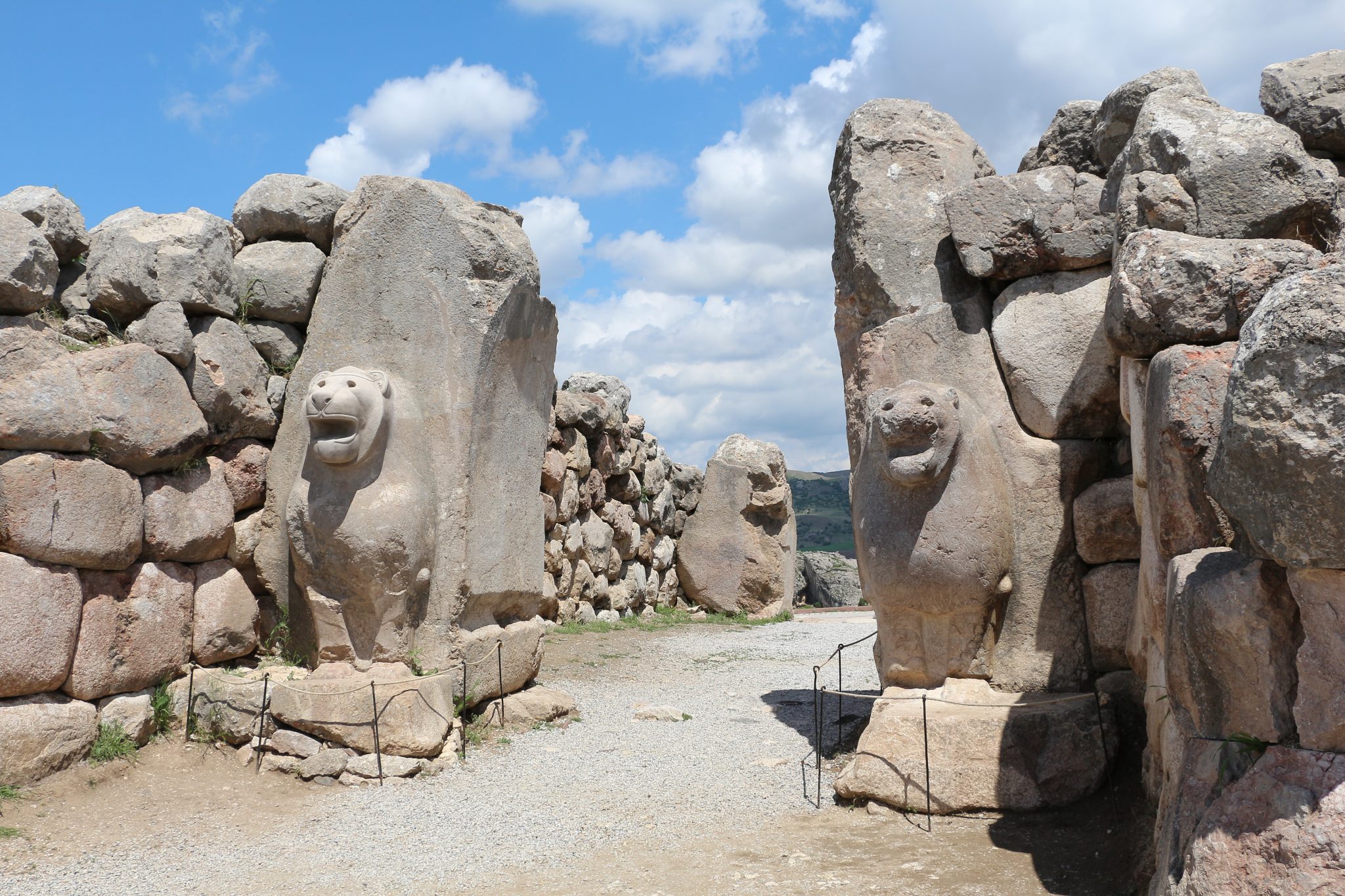
Lion Gate, Hattusa

What Caused The Mysterious Bronze Age Collapse?

The urge to find a single explanation as the cause for such calamitous events seems to come from a modern human need for an easy explanation as often as possible. The decline of the Late Bronze Age civilizations of the Mediterranean and Near East has puzzled historians and archaeologists for centuries. While many have ascribed the collapse of several civilizations to the enigmatic Sea Peoples, Professor Eric H. Cline, former Chair of the Department of Classical and Near Eastern Languages and Civilizations at George Washington University, presents a more complicated and nuanced scenario in his new book, 1177 BC: The Year Civilization Collapsed. Professor Eric H. Cline speaks to Ancient History Encyclopedia’s James Blake Wiener about his new title and the circumstances that lead to the collapse of the cosmopolitan world of the Late Bronze Age in this interview.

Palmyra in Photos: Ancient Gem of Syria

Palmyra (also known as Tadmor) is mentioned frequently in the news, as the so-called Islamic State is advancing on this ancient gem of a ruined city in Syria. The formerly prosperous metropolis of Palmyra is a UNESCO World Heritage Site, with good reason. From 44 BCE to 272 CE, the city became a wealthy trade centre at the crossroads between Roman, Greek, and Persian cultures. Located in an oasis in the Syrian desert along key trade routes across the ancient world, it was an important hub for trade, and many caravans passed through this city, increasing its wealth. Its architecture and arts reflects this mix of styles and economic wealth.

The Hadrianic Baths at Aphrodisias, Caria (Turkey)

The beautiful ancient Greek city of Aphrodisias, still partly excavated, is one of the most important archaeological sites of the late Hellenistic and Roman period in Turkey. The city was located in Caria in Asia Minor, on a plateau 600 meters above sea level. Today it lies near Geyre village, some 80 kilometers west of Denizli. The city was founded in the 2nd century BC on the site of a rural sanctuary of Aphrodite, the Greek goddess of love. It was named after Aphrodite who had her unique cult image, the Aphrodite of Aphrodisias, and who became the city’s patron goddess.

The Power and Pathos of Hellenistic Bronze Sculpture

Power and Pathos: Bronze Sculpture of the Hellenistic World underscores the power, prestige, and pre-eminence of ancient sculpture during the Hellenistic Era. This blockbuster show, which opened at the Palazzo Strozzi in Florence, Italy this spring, is the first major international exhibition to assemble nearly 50 ancient bronzes from the Mediterranean region and beyond in a single venue. Prized over the centuries for their innovative, realistic displays of physical power and emotional intensity, the sculptures of the Hellenistic world mark a key and important transition in art history. In this interview, Dr. James Bradburne, the recently departed Director General at the Palazzo Strozzi, introduces James Blake Wiener of Ancient History Encyclopedia (AHE) to the finer points of the exhibition.

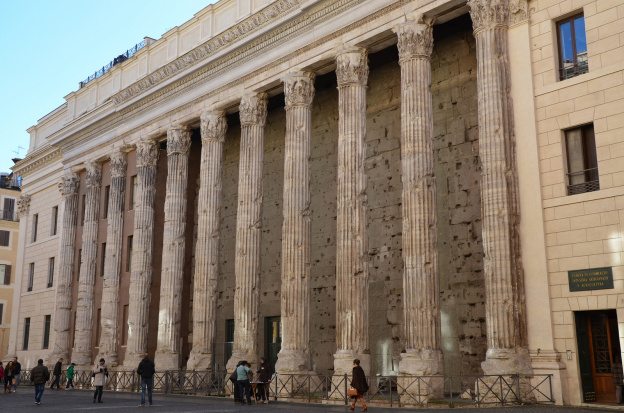
The Hadrianeum and the personifications of provinces

Just a short walk from the Pantheon in Rome, in Piazza di Pietra, are the majestic remains of the Temple of the deified Hadrian (Hadrianeum) built by Antoninus Pius, Hadrian’s adopted son and successor. Of the original temple, only eleven columns with capitals and the cella wall are still visible today. In 1696, during the pontificate of Pope Innocent XII, the surviving part of the temple was incorporated into a large building designed by Carlo Fontana to house the central Customs Office. In 1879-82 the building was modified and its baroque decoration was replaced by a simpler one; in 1928 the wall of the cella was freed from later additions. Today the building houses the Borsa Valori di Roma, Rome’s stock exchange.

Apamea, Syria: Roman Ruins in a Warzone

The human cost of war can be so unimaginably large that it seems unfeeling to speak about the damage to cultural and natural heritage, yet it is important to acknowledge that cost as well. The disaster in Syria will be felt not just by a few generations, but for the rest of time. After World War II, the international community recognized the need to protect cultural and natural heritage in times of conflict, and UNESCO was formed. As in all human history, it seems like all those conferences, petitions, international declarations, talks and meetings failed to come up with a decisive way to prevent the destruction of life and heritage. Unfortunately, Syria is just one of the many cases of failed attempts. The destruction of archaeological sites in conflict zones is not, as the media often reports, done mostly because of the religious views of perpetrators. No, the main reason is that there is big money to be made in the black antiquities market. Some people buy and own artifacts coming from Syria, Iraq and other zones of conflict (sometimes without realizing their origin) and …