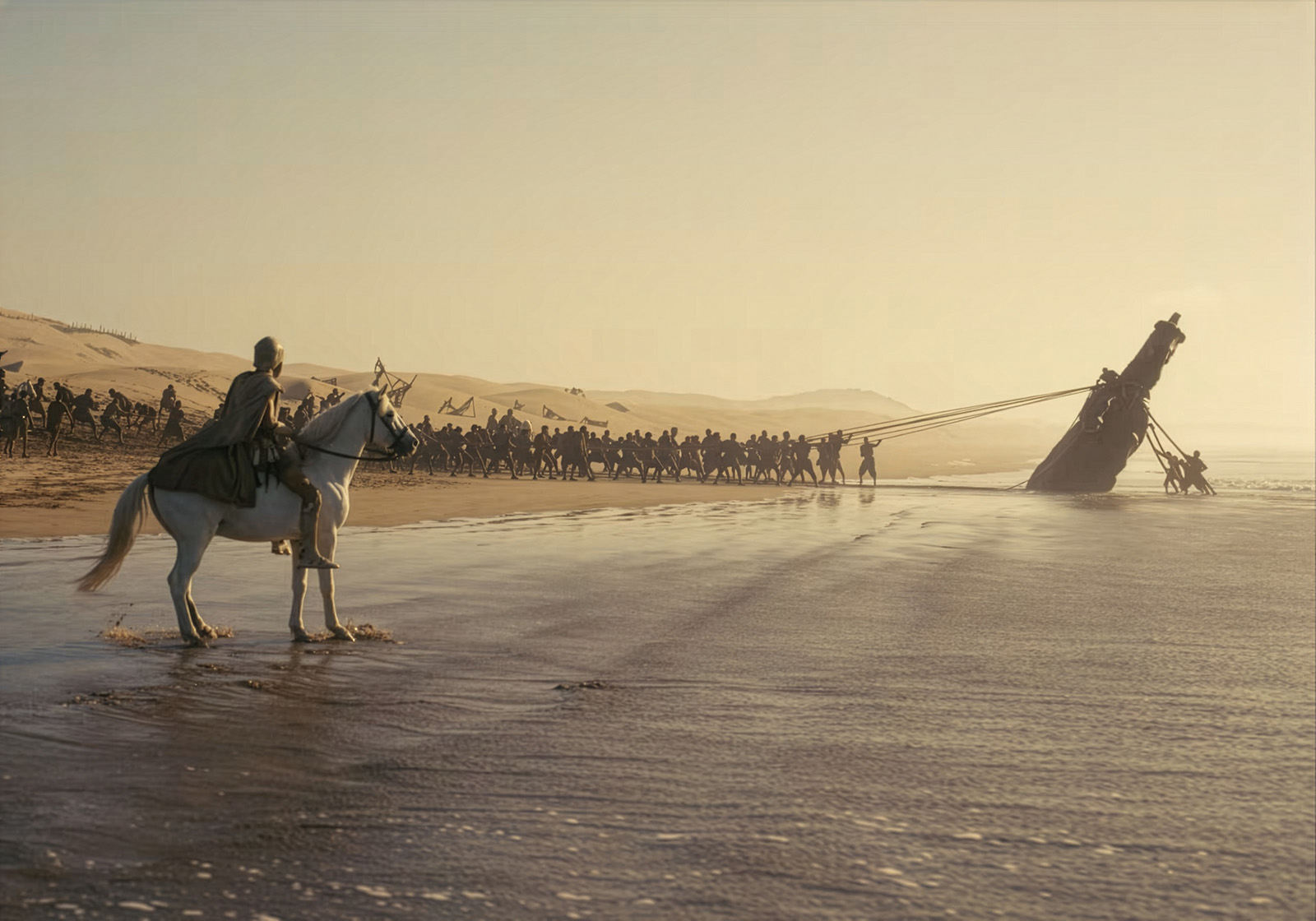
Christopher Nolan’s The Odyssey movie has become the phenomenon of this summer. As a history website with a strong weight on ancient content (due to us starting out as Ancient History Encyclopedia), we’re seeing a clear effect on our website. Thanks to the movie, more people around the world are interested in learning more about Odysseus, the Trojan War and Greek Mythology in general.
We’re always very happy when popular culture manages to capture the popular imagination to such a degree that it causes more engagement with history. Engaging people with history is part of our mission statement, after all.
Odysseus in Our Data
While mythology has always been a popular subject among the readers of the World History Encyclopedia website, we’re seeing a real surge in readership on Greek mythology subjects, and The Odyssey in particular.
Traffic for pages related to Greek mythology and the Trojan War on World History Encyclopedia has seen a significant increase of approximately 290% in the 18 days since July 17th, when Christopher Nolan’s The Odyssey saw its general release (compared to the 18 preceding days). This resulted in an overall 8.89% increase in visits to World History Encyclopedia. Three pages in particular saw a huge jump:
| Page | Visits Increase |
|---|---|
| Odysseus | +571% |
| Trojan War | +525% |
| Iliad | +289% |
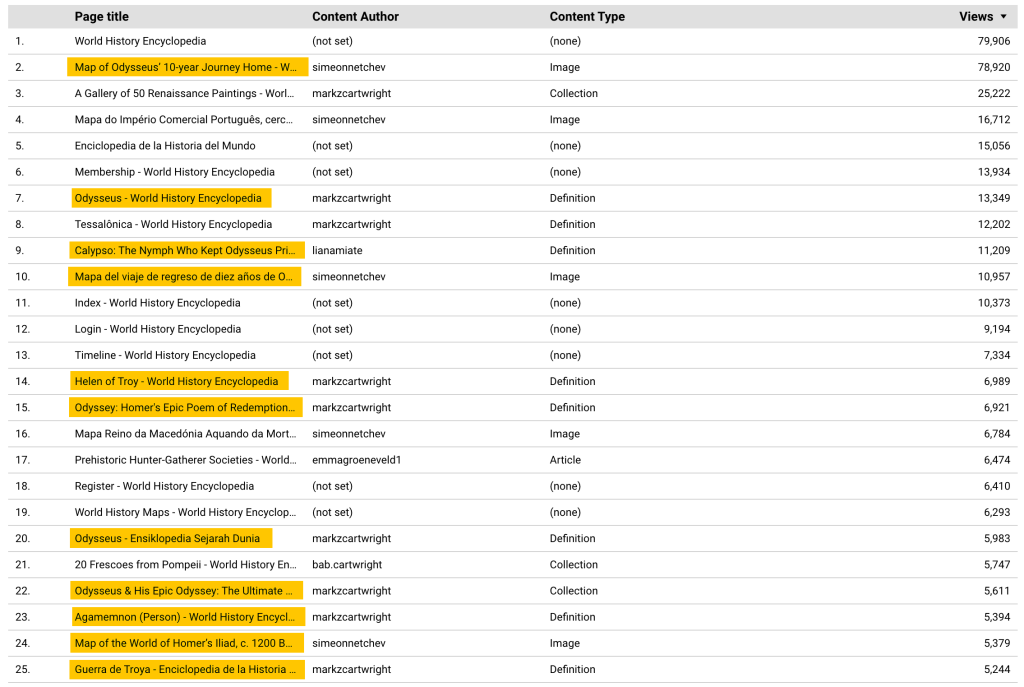
Below is a list of our Top 25 pages on our website in terms of views (5 July – 3 August 2026) and we’ve highlighted all Odyssey-related topics for your convenience. While the majority of these are in English, we’re also seeing Odysseymania clearly spreading in other languages:
You can see the Top 8 pages presented in graph form below, showing a clear increase in views for our Map of Odysseus’ 10-year Journey Home directly after the movie was released on the 17th of July.
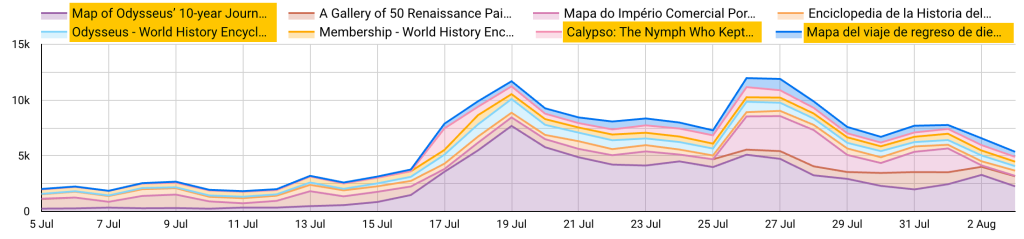
Thanks to its Creative Commons licence this map is now found all over the internet… it’s become somewhat famous!
Odysseus in Tag Data
Each page on our website is tagged, usually with multiple tags. Most pages have anywhere between 3 and 7 tags that help us categorise them, link them, and help improve search results. For each visit we also track which tags were viewed, and here’s the list of Top 50 Tags viewed on World History Encyclopedia recently:
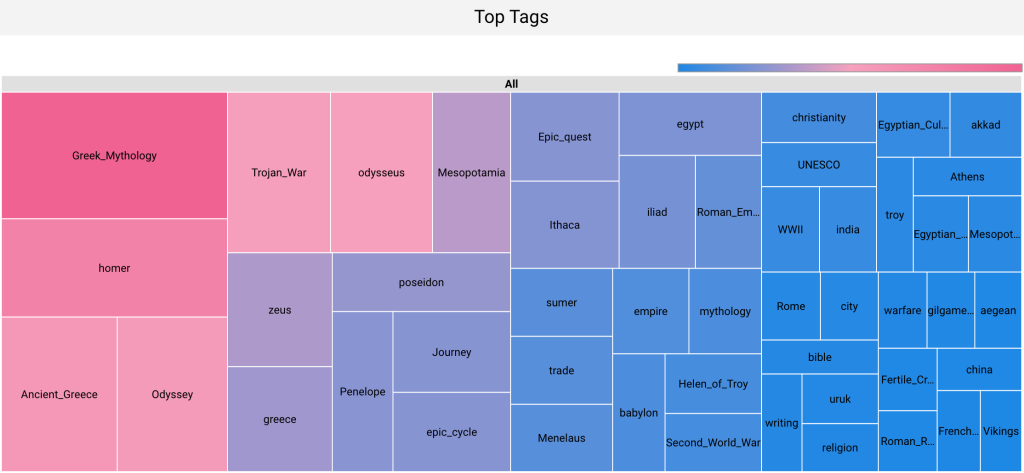
The boxes are sized proportionally to how many times content with each of these tags was viewed. If you zoom in, you can see that our top tags are dominated by Odyssey-related subjects:
- Greek Mythology
- Homer
- Ancient Greece
- Odyssey
- Trojan War
- Odysseus
- Mesopotamia
- Zeus
- Greece
- Poseidon
- Penelope
- Journey
- Epic Cycle
- Epic Quest
- Ithaca
What Does This Mean?
Blockbusters come and go but once curiosity has been sparked, it can lead down a long path! A movie can give someone a reason to type Odysseus into the search bar and go down a rabbit hole — what happens next depends on what they find on the internet.
We believe information on the internet should be free, accurate, and written by humans who know the difference between Homer’s original and Nolan’s interpretation. That means citations you can follow, authors you can name, and no paywall between a curious reader and a reliable answer, in as many languages as we can manage.
If this summer sends even a fraction of those viewers from a cinema seat to deep-dive into history or even read Homer’s original, the wine-dark sea will have done its job again — nearly three thousand years on.